

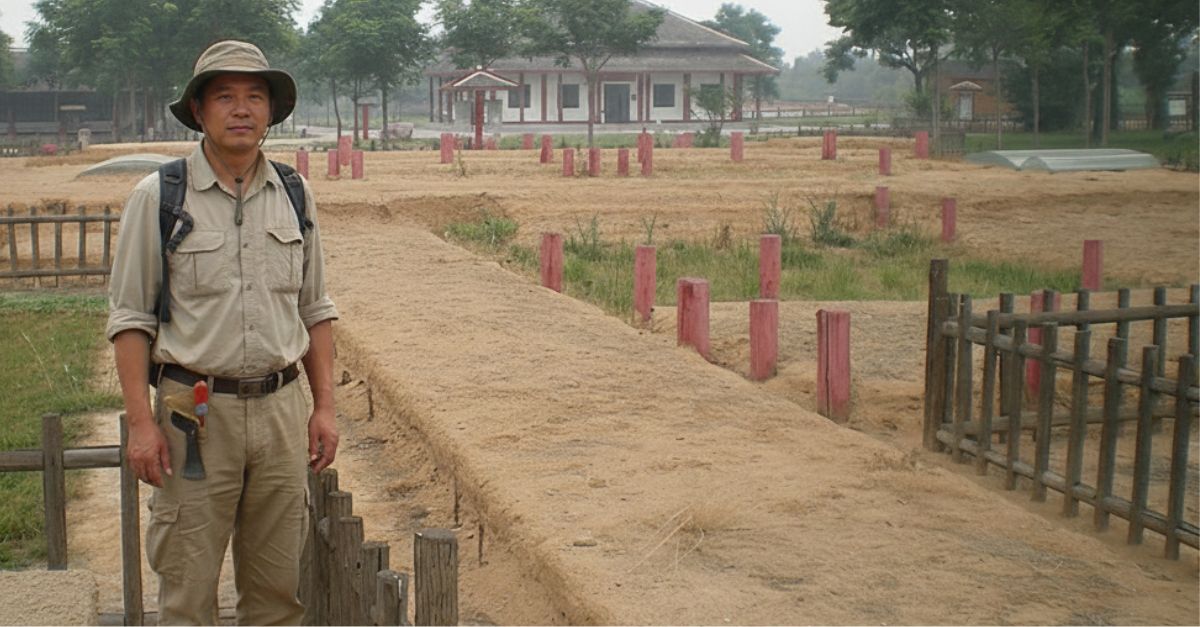
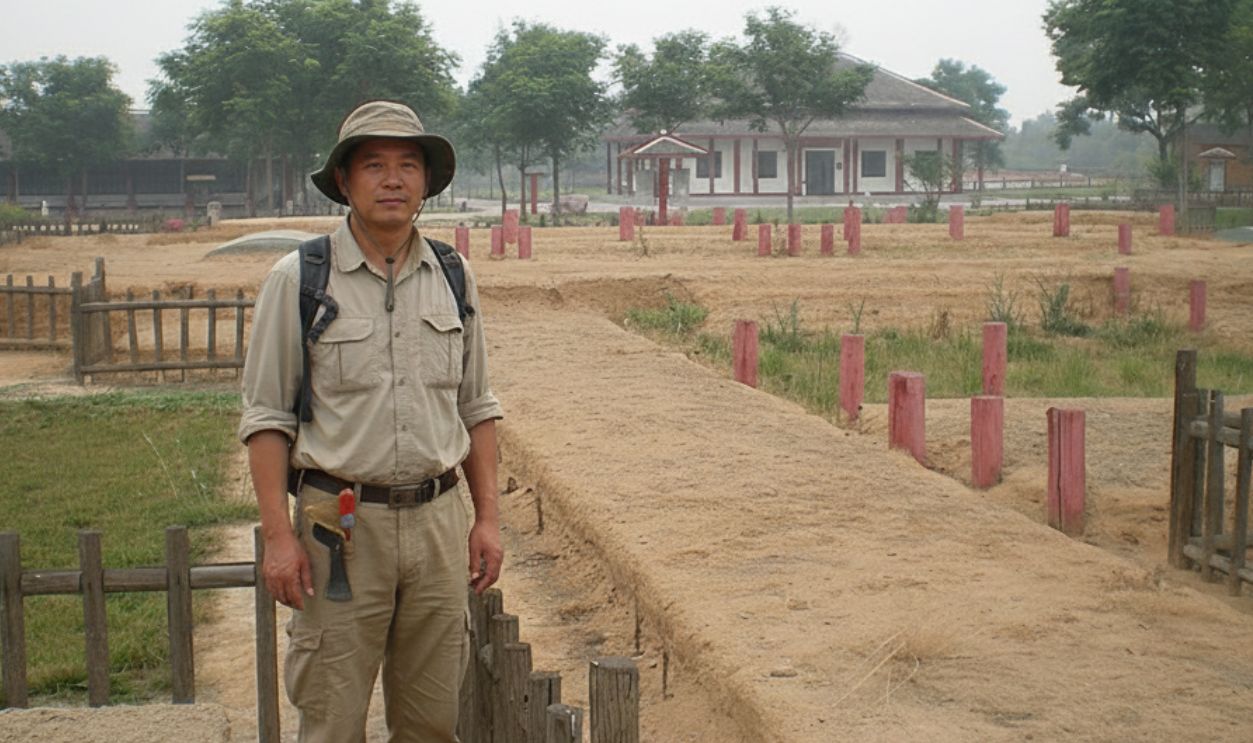
 tak.wing, CC BY-SA 2.0, Wikimedia Commons, Modified
Archaeological teams working along the north bank of the Huan River in Henan Province's Anyang City just made a discovery that completely reshapes what we know about ancient Chinese urban planning. The find involves a massive thoroughfare that once served as a main artery through Dayishang, the name the Shang Dynasty people gave to their capital over 3,000 years ago. This was the first stable capital that the land we now call China ever had. Niu Shishan leads the excavation team from the Chinese Academy of Social Sciences, and his crew has uncovered something that challenges previous assumptions about how Bronze Age cities were designed and built. The National Cultural Heritage Administration announced these findings in December 2024, and they reveal a level of sophistication that few expected from a civilization that existed between 1600 and 1046 BCE.
A Deliberately Designed Urban Grid
The road itself stretches at least one mile and features a drainage ditch running its entire length, which makes it the longest urban traffic artery ever discovered at Yinxu, also known as the Yin Ruins. Dense wheel ruts still mark the road's surface, telling the story of countless chariots and carts that traveled this route during China's Bronze Age. What makes this discovery particularly fascinating is that the road wasn't just a random path—it formed part of an intentionally planned grid system with three main east-west roads that intersected with three main north-south arteries. The road measures 49 feet wide in most sections and expands to nearly 98 feet at its widest points, clear evidence of its importance as a major route through the capital.
Main roads throughout the excavated areas are spaced 1,050 to 1,800 feet apart, while intermediate-level streets sit about 328 feet from each other. This creates a hierarchical transportation network that looks surprisingly similar to modern urban planning principles. Archaeologists have classified Yinxu's roads into three distinct levels based on their width—main roads, streets, and alleys—which shows that the Shang Dynasty capital operated with clear organizational principles for traffic flow and urban development. The northern end of the road deviates slightly eastward to align precisely with previously identified Shang Dynasty structures. It’s proof that engineers intentionally designed these arteries to connect with existing architecture rather than simply cutting straight paths through the city.
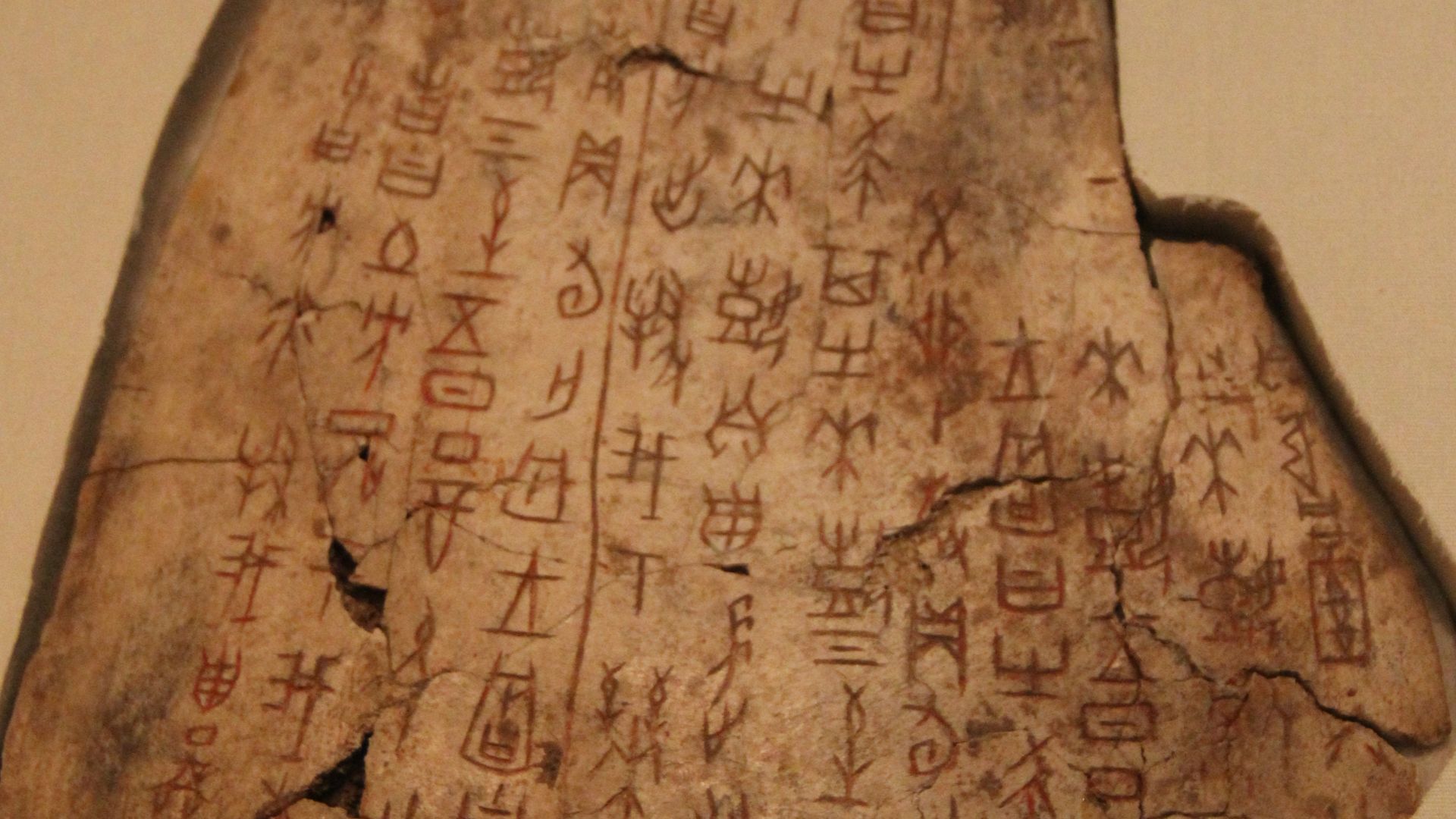
Fine sand covers the road surface and mixes with fragments of broken pottery and small stones that sit embedded in the soil beneath. What's particularly interesting is that bronze horse bridles and stone tools discovered in the surrounding layers suggest this route served both everyday transportation and potentially ceremonial purposes that involved horses and chariots. The profusion of wheel ruts carved into the surface over centuries of use provides physical evidence of constant heavy traffic throughout the years. Deep grooves show exactly where wooden wheels repeatedly followed the same paths, creating permanent marks that tell the story of this bustling ancient thoroughfare. Meanwhile, oracle bone inscriptions discovered at Yinxu back in 1899 represent China's earliest known writing system and confirm that the Shang people called their capital "Dayishang," which translates to the grand city of the Shang Dynasty.
Infrastructure That Supported A Thriving Capital
The one-mile drainage ditch running alongside the road represents advanced infrastructure engineering for the Bronze Age period. This channel would have prevented flooding during heavy rains and kept the road surface passable throughout the year, which was crucial for maintaining commerce and communication across the sprawling capital. Archaeologists discovered two sections of the ancient Huan River course during excavations. Earlier findings from the royal mausoleum area included trenches surrounding graves and sacrificial pits that formed a moat system to protect elite burials, a clear sign that water management played a central role in both practical infrastructure and sacred architecture.
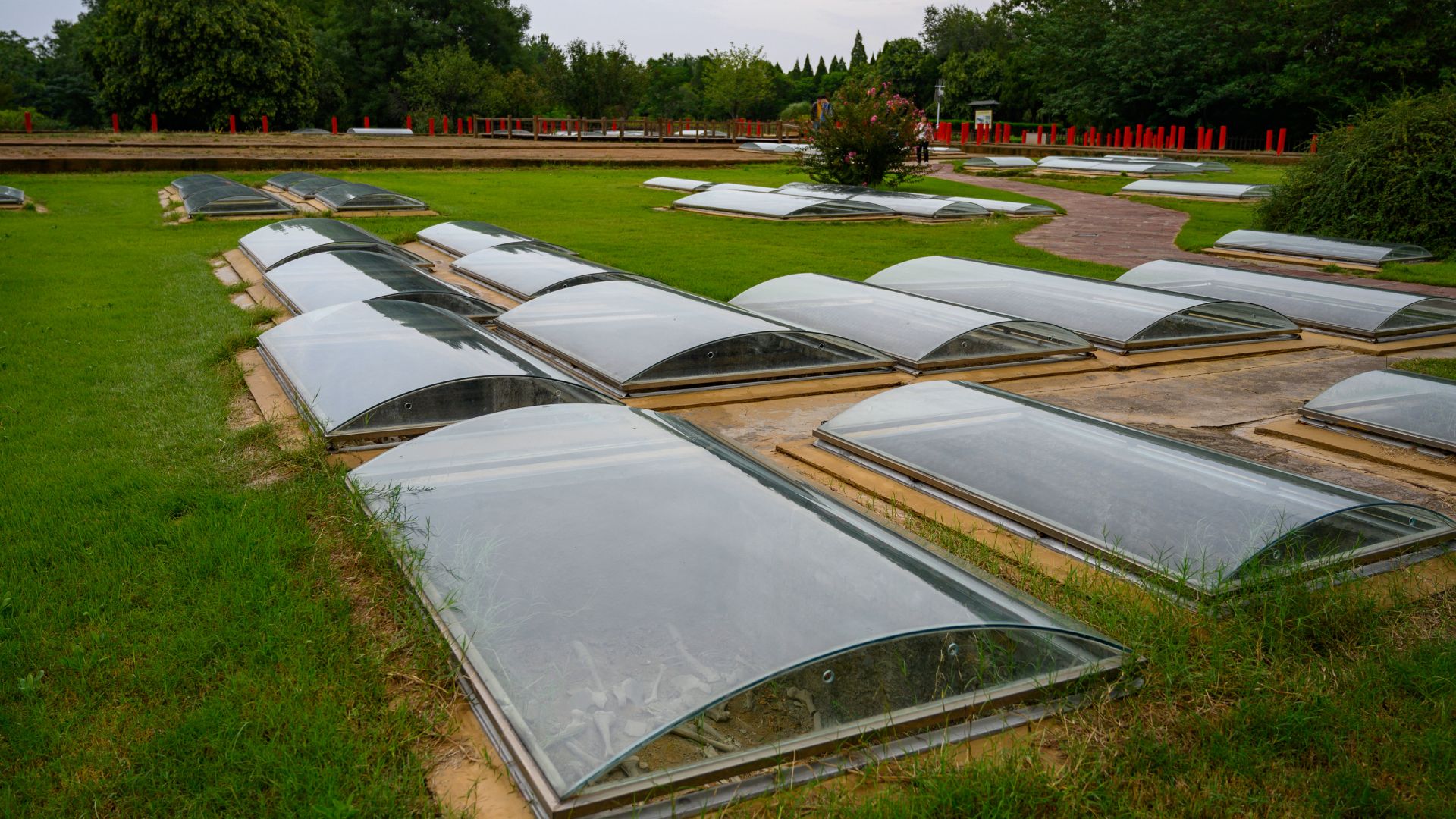
Excavations also revealed 48 sacrificial pits arranged in six neat rows east of the western trench, with most containing horse remains alongside evidence of human, cow, dog, pig, elephant, and bird sacrifices. Recent analysis of pits from the late Shang Dynasty under King Zhou showed a 67% decrease in human bones compared to earlier periods, with more animal bones used instead. The remaining human bones came from prisoners of war rather than civilians or slaves, which challenges traditional narratives about King Zhou's brutality. Archaeologists also discovered a 20‑acre settlement from the early Western Zhou Dynasty dating to the 11th century BCE—the largest such settlement found at Yinxu. This finding may help explain how the Western Zhou people utilized the former Shang capital after they defeated the dynasty around 1046 BCE.
 xiquinhosilva, Wikimedia Commons



.jpg)