
The Vacation Looked Peaceful Online
The website showed empty loungers, calm blue water, and couples quietly sipping drinks beneath palm trees. I expected a relaxing adults-only escape where I could finally sleep late and read beside the pool. Instead, music started before lunch, drinking games followed, and the evening entertainment continued well past midnight. How did I end up here? Is there anything I can do?
Adults-Only Does Not Mean Quiet
The term “adults-only” usually describes an age restriction, not a promise of silence or relaxation. A property can exclude children while actively catering to bachelor parties, group celebrations, and guests who want an energetic social scene. Some adults-only resorts focus on wellness and romance, while others promote DJs, pool parties, nightclubs, and unlimited drinks.

The Same Label Covers Opposite Experiences
Two resorts can both call themselves adults-only while offering completely different vacations. One might revolve around yoga classes, private dinners, and quiet beaches, while another schedules foam parties and live entertainment throughout the day. The age policy tells you who can enter, but it does not tell you how those guests will behave.

Resort Marketing Creates A Carefully Controlled Mood
Professional photographs are designed to show a property at its most appealing. They may be taken early in the morning, framed to exclude crowded areas, or focused on quieter corners of a large complex. A peaceful-looking photo does not necessarily represent the atmosphere during peak afternoon or evening hours.
Watch The Promotional Videos Closely
A resort’s videos often reveal more than its still photographs. Look for DJs, dance floors, champagne spraying, swim-up bars, nightclub lighting, and groups carrying matching cups. Those details may appear briefly, but they can provide a much more accurate picture of the experience the resort is selling.

Study The Words Behind The Pictures
Certain phrases can signal that a resort is more energetic than it first appears. Descriptions such as “vibrant atmosphere,” “nonstop entertainment,” “social pool,” “lively nightlife,” and “the party never stops” should be taken literally. Even softer wording such as “playful luxury” or “high-energy escape” may indicate that quiet relaxation is not the main attraction.

Entertainment Schedules Reveal The Real Priorities
Search the resort’s website for a weekly activities or entertainment schedule. Daily DJ sets, pool competitions, theme nights, dance parties, and late-night shows suggest that music and group participation are central to the experience. A schedule built around meditation, nature walks, spa programs, and acoustic performances points toward a calmer stay.

The Main Pool Can Define The Entire Resort
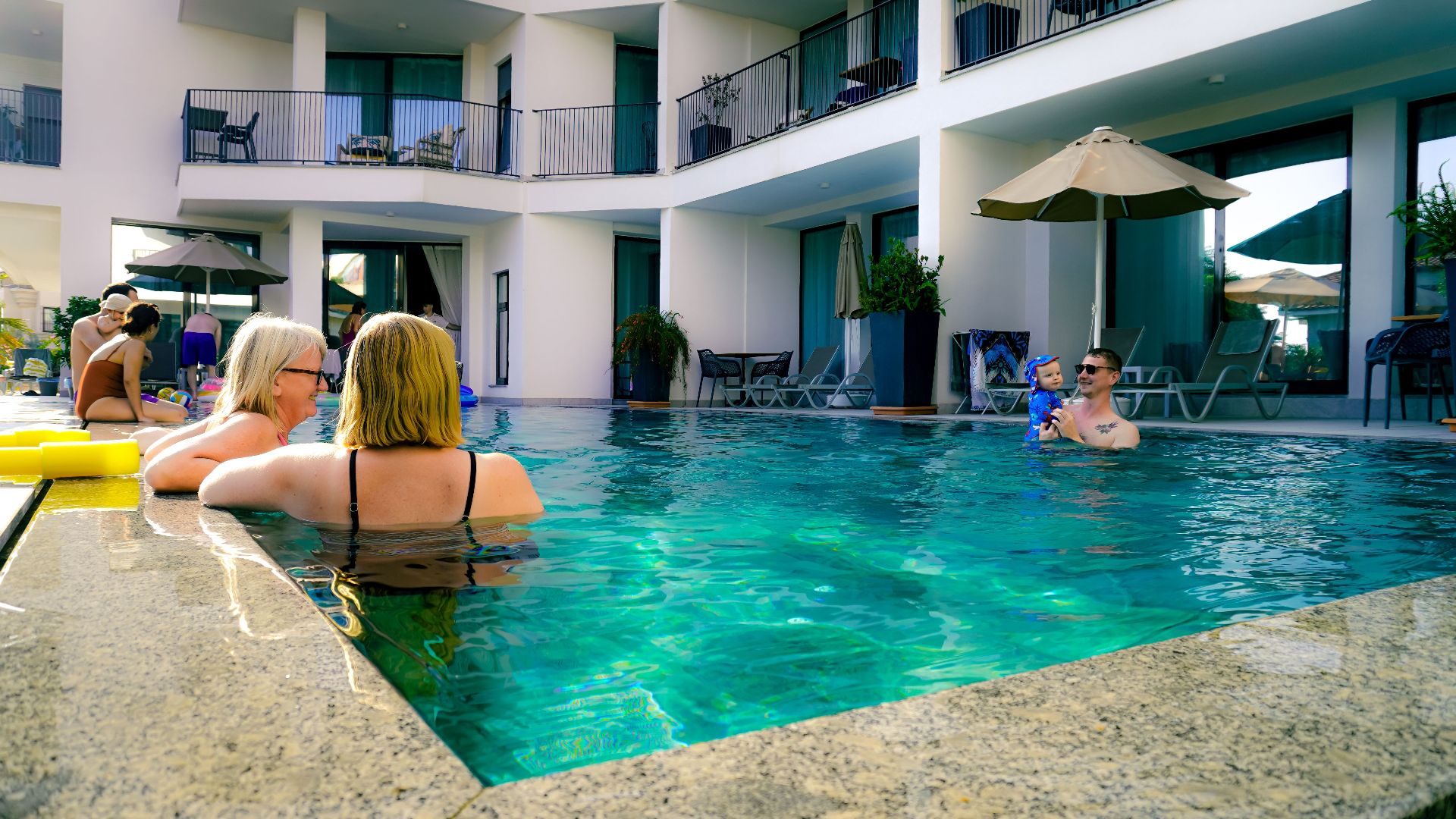
At many all-inclusive properties, the largest pool becomes the social center. Rooms, restaurants, and walkways may surround it, allowing amplified music to travel through much of the property. Ask whether there is a separate quiet pool and whether music is played at both locations.

Swim-Up Bars Change The Atmosphere
A swim-up bar is not automatically a problem, but it usually creates a more social pool environment. Guests tend to gather there for longer periods, particularly when drinks are included in the room price. Resorts that heavily feature swim-up bars in their marketing may be targeting travelers who want activity rather than solitude.
 Monkey Business Images, Shutterstock
Nightclubs Rarely Stay Contained
An on-site nightclub may look convenient when you are browsing amenities. However, bass can travel through walls, courtyards, hallways, and open-air sections of a resort. Before booking, ask where the club is located and which room buildings are farthest from it.

Read Reviews For Atmosphere, Not Just Ratings
A high overall score does not mean a resort will suit your preferred vacation style. A reviewer may award five stars precisely because the pool party was loud and energetic. Concentrate on what guests describe rather than whether they considered it good or bad.

Search For Specific Noise Words
Use the search function on review platforms whenever it is available. Try terms such as “quiet,” “noise,” “DJ,” “party,” “music,” “nightclub,” “sleep,” “wedding,” and “group.” Repeated mentions across several independent reviews are more useful than one unusually positive or negative account.

Sort Reviews By Most Recent
Resorts can change significantly after renovations, management changes, or a new entertainment program. Reviews from several years ago may describe a completely different property. Experienced hotel reviewers often recommend sorting by the newest reviews and checking multiple platforms for recurring complaints or praise.

Pay Attention To The Reviewer
The most useful review is written by someone who wanted a vacation similar to yours. A honeymooning couple seeking privacy may evaluate noise differently from a group celebrating a birthday. Look for travelers who mention early nights, relaxation, reading, spa time, or sensitivity to sound.

Guest Photos Show The Resort In Motion
Traveler-uploaded photographs can expose crowds, party decorations, portable speakers, and busy pool decks that professional images leave out. They can also show how close rooms are to entertainment areas. Videos are especially helpful because they capture volume, movement, and the general mood.

Check The Resort’s Social Media
Official social accounts often provide a clearer picture of the brand’s desired identity. Scroll through several months of posts instead of judging the property by one carefully chosen image. Frequent clips of dancers, DJs, bottle service, costume parties, and cheering crowds are strong evidence of a lively resort.

Tagged Posts Can Be Even More Revealing
Do not stop with the resort’s official feed. Examine recent public posts and videos in which guests have tagged the property or location. These often show ordinary afternoons and evenings rather than staged promotional moments.

Search The Resort Name On Video Platforms
Short videos can answer questions that hundreds of written reviews cannot. Search for the resort name alongside phrases such as “pool party,” “nightlife,” “walk-through,” or “honest review.” Make sure the footage is recent because entertainment programs and resort concepts can change.

Look Beyond The Resort Boundary
Noise may come from neighboring properties, beach clubs, bars, or entertainment districts. Use a map to inspect what surrounds the resort and how close the rooms are to nightlife venues. A property can operate quietly while still being exposed to music from next door.

Seasonal Events Can Transform A Property
A peaceful resort may become much livelier during spring break, holiday weekends, music festivals, or major group events. Weddings, corporate retreats, and destination celebrations can also change the atmosphere temporarily. Search your travel dates together with the resort name before paying a nonrefundable rate.

Influencer Events Can Take Over Shared Spaces
Some resorts host promotional trips, fitness gatherings, themed weekends, and social media events. These groups may receive organized pool activities, private parties, or amplified entertainment. Look for an events calendar and ask whether any large groups are scheduled during your stay.

Call With Direct Questions
The U.S. Department of State advises travelers to research accommodations and contact the property to confirm important facilities or requirements before booking. General questions such as “Is the resort quiet?” may produce a vague answer. Ask what time outdoor music ends, whether the main pool has a DJ, and which buildings are farthest from entertainment areas.

Get Important Promises In Writing
A phone conversation can help, but written confirmation is easier to reference later. Email the property and explain that a quiet room is important to you. Ask whether it can place you away from bars, elevators, theaters, event spaces, connecting doors, and service areas.

Room Location Matters Enormously
Even a party-oriented resort may have quieter buildings or room categories. A room near the main pool can feel completely different from one near the spa or at the far edge of the property. Travel specialists commonly recommend requesting a room away from restaurants, bars, elevators, and other major noise sources.
 LightField Studios, Shutterstock
Understand What A Quiet-Room Request Means
A request is not always a guarantee unless the hotel explicitly confirms it as part of your reservation. Room assignments can change because of occupancy, maintenance, or operational needs. Booking a specific building or premium quiet-zone category may offer more certainty than adding a preference to the reservation notes.

Ratings Cannot Measure Personal Compatibility
Hotel classifications usually focus on facilities, services, cleanliness, and comfort rather than whether a property feels peaceful. AAA, for example, uses professional inspections to evaluate rooms, public areas, amenities, and service. A highly rated hotel can still be a terrible match for someone who dislikes organized entertainment or late-night activity.

Reviews Still Require Healthy Skepticism
Reviews are valuable, but no platform can guarantee that every submission is genuine. The Federal Trade Commission’s Consumer Review Rule prohibits practices including fake reviews, purchased sentiment, undisclosed insider reviews, and certain forms of review suppression. Tripadvisor also reports using automated systems and investigative teams to identify suspicious content, which is another reason to compare patterns across several sources.

Flexible Rates Buy You An Exit
The cheapest rate may become expensive when new information appears after booking. A refundable reservation allows you to continue monitoring recent reviews, event announcements, and social posts. Always record the cancellation deadline because it may be based on the resort’s local time.

A Travel Advisor Can Identify Resort Personalities
Travel advisors who regularly book a destination often know which properties are romantic, social, wellness-oriented, or built around nightlife. Their firsthand visits and client reports can reveal details that are difficult to find in marketing materials. Be specific about your desired bedtime, preferred pool atmosphere, and tolerance for organized activities.

Speak Up As Soon As The Noise Starts
When a stay does not match what you expected, contact the front desk immediately. Ask for a room farther from the entertainment, a move to a quieter building, or help locating a calmer area of the resort. Complaints raised during the stay are generally easier for a hotel to address than demands made after checkout.

Document A Serious Mismatch
Save the original listing, screenshots of promises, written correspondence, and recordings that demonstrate the problem. Keep notes showing when you contacted the resort and how it responded. This documentation becomes important when requesting compensation from the property, booking platform, travel provider, or card issuer.

Chargebacks Are Not A First Step
A disappointing atmosphere alone does not automatically justify reversing a credit card charge. Begin by asking the resort or booking company to resolve the issue, and review the terms you accepted. Credit card disputes can be complicated, and consumer finance guidance generally treats them as a later option when a legitimate billing problem cannot be corrected by the merchant.

The Right Resort Leaves Clues Everywhere
No research method can guarantee complete silence, especially when other guests are involved. However, the resort’s language, activities calendar, recent reviews, guest videos, room map, and social media presence usually create a recognizable pattern. The safest approach is to ignore the adults-only label and investigate the actual vacation experience being promoted.

Quiet Should Be A Specific Feature
The best question is not whether a property allows children. Ask whether it has designated quiet areas, entertainment-free pools, enforced nighttime hours, and rooms isolated from social venues. When peacefulness is truly part of a resort’s identity, it usually appears consistently in its policies, reviews, design, and daily schedule.

You May Also Like:
12 Bucket List Resorts In The World’s Most Isolated Places