A Walk Through Deep Time
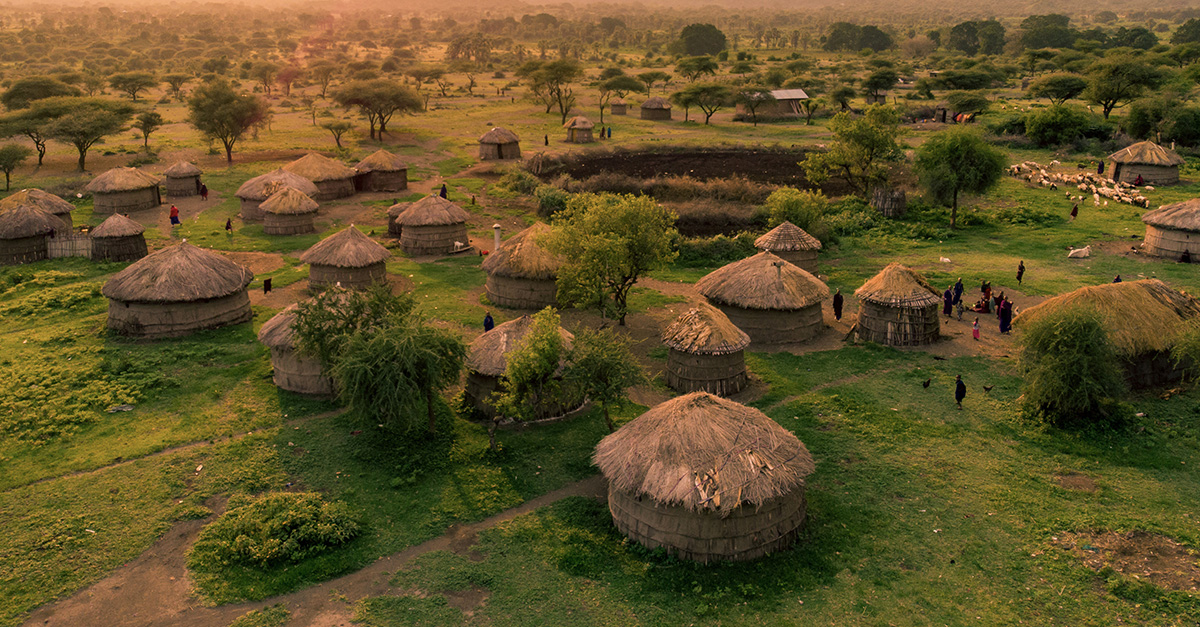
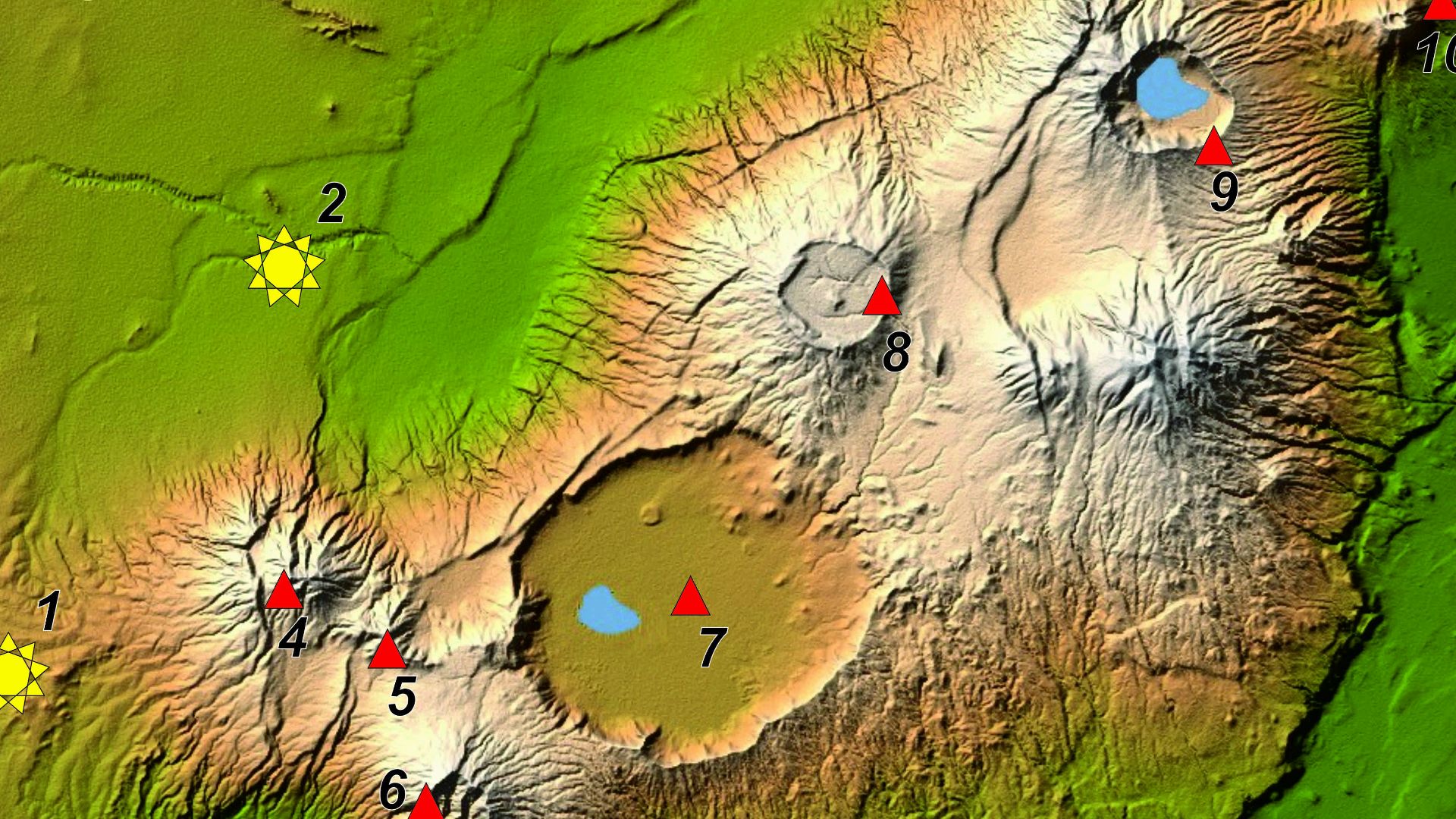
Imagine standing on a quiet stretch of land in northern Tanzania, feeling the sun on your shoulders and the dust beneath your feet. Now imagine that same patch of earth 3.6 million years ago, when three early hominins wandered across a blanket of fresh volcanic ash—leaving behind footprints that would survive longer than almost anything else they touched in life.
When A Single Discovery Changes Everything
Those ancient footsteps, preserved almost by accident, would one day become one of the most direct pieces of evidence we have for upright walking—proof that long before cities or tools or fire, our ancestors were already getting around on two feet with surprising confidence.
 Fidelis T Masao and colleagues, Wikimedia Commons
A Volcanic Eruption Sets the Stage
It all began when a nearby volcano erupted, spreading a fine layer of ash over the landscape. A light rain soon turned the ash into a soft, pliable surface—just sticky enough to record footprints with incredible detail before it hardened into solid rock.

Nature Builds A Time Capsule
As strange as it sounds, the combination of erupting volcanoes and gentle rain created the perfect recipe for fossilization. The earth turned into a prehistoric sidewalk, quietly recording the passing footsteps of creatures who had no idea they were leaving messages for the future.

A Chance Spotting That Sparked A Revolution
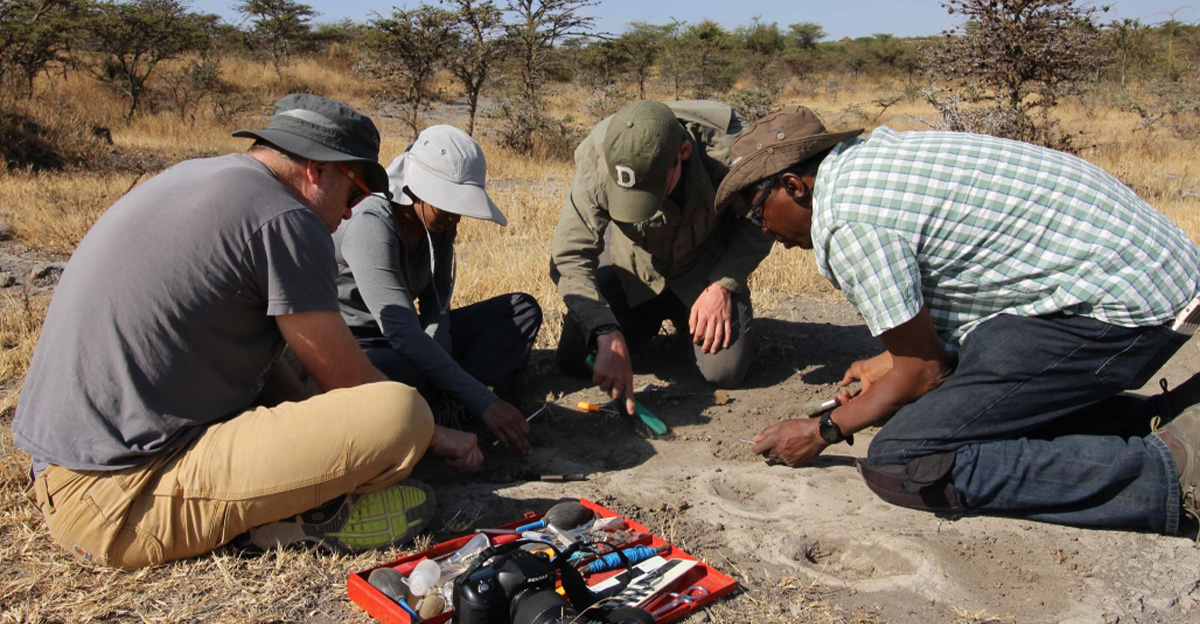
Fast-forward to 1976, when Mary Leakey and her archaeological team noticed fossilized animal tracks at Laetoli. Two years later, Paul Abell spotted something far more astonishing—a trail of distinctly hominin footprints. It wasn’t just a scientific surprise; it was a moment that rewrote the textbooks.
 Smithsonian Institution from United States, Wikimedia Commons
A Trail Stretching Across The Ages
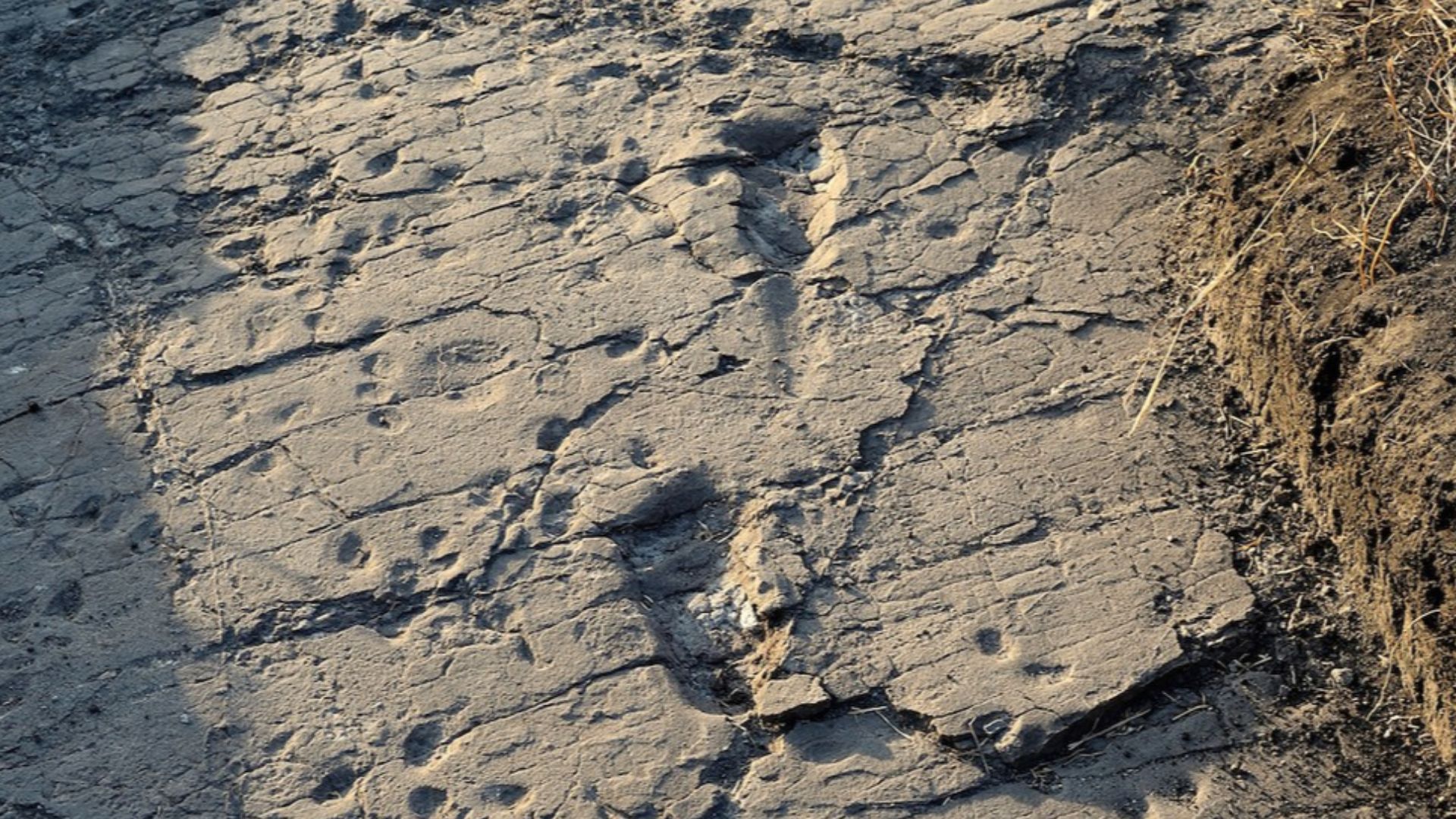
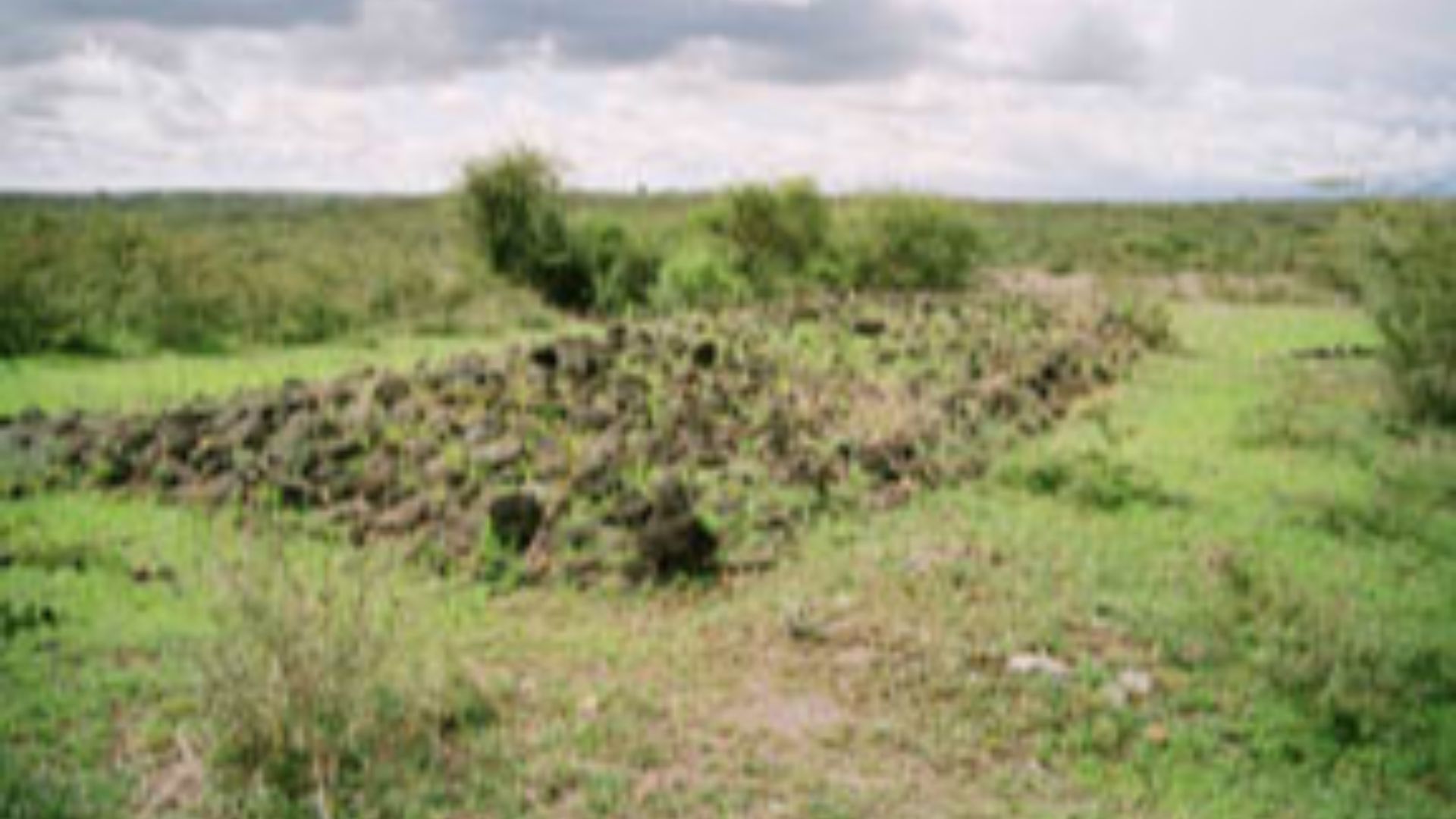
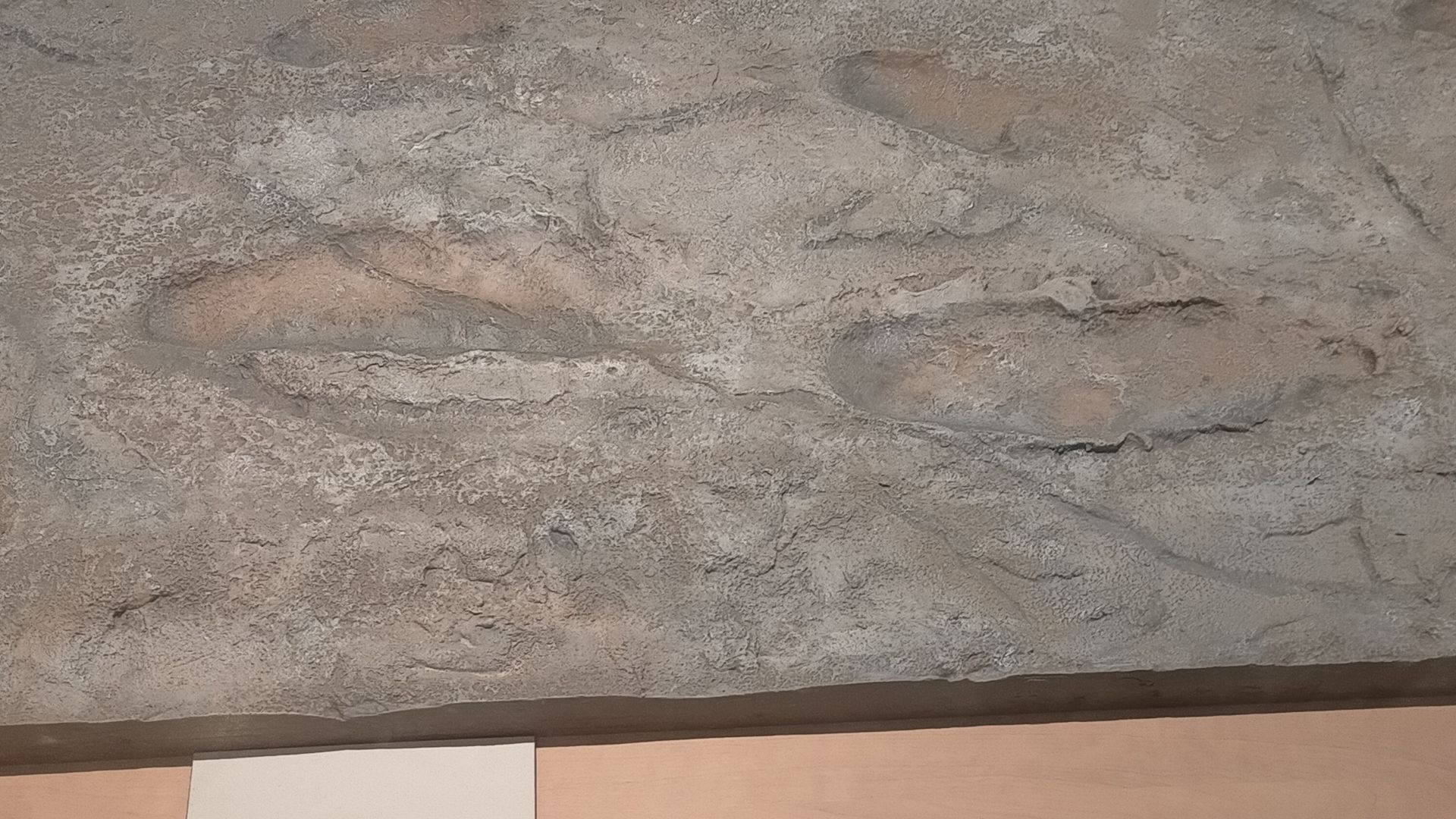
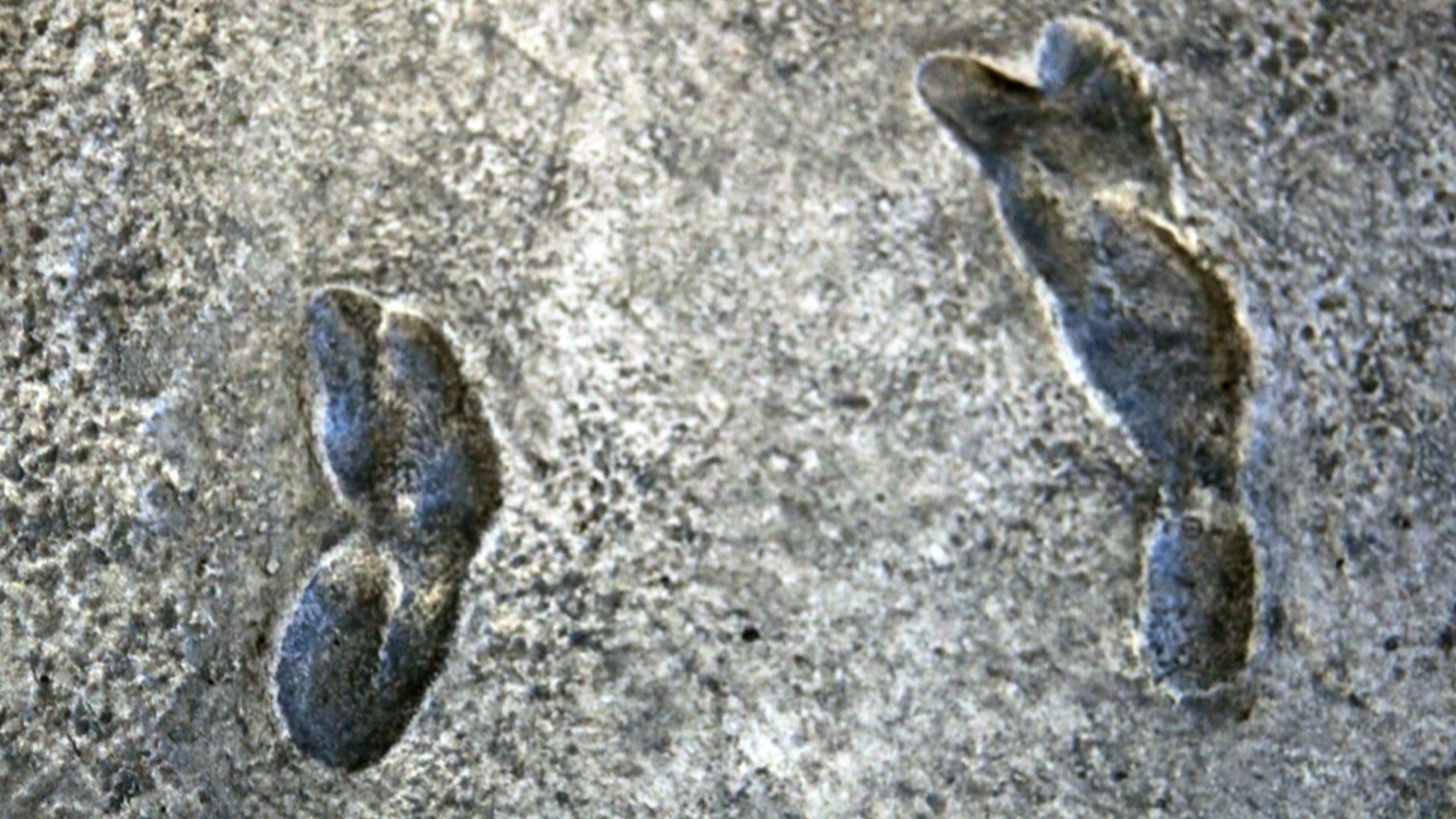
The main trackway, known as Site G, stretches about 27 meters and contains roughly 70 individual footprints. Even more intriguing is that at least three hominins made the trail, walking in the same general direction—possibly together, possibly as a family or small group.
 McHenry, L, Njau, J, Pante, M and de la Torre, I 2012, Wikimedia Commons
Footprints That Look Strikingly Familiar
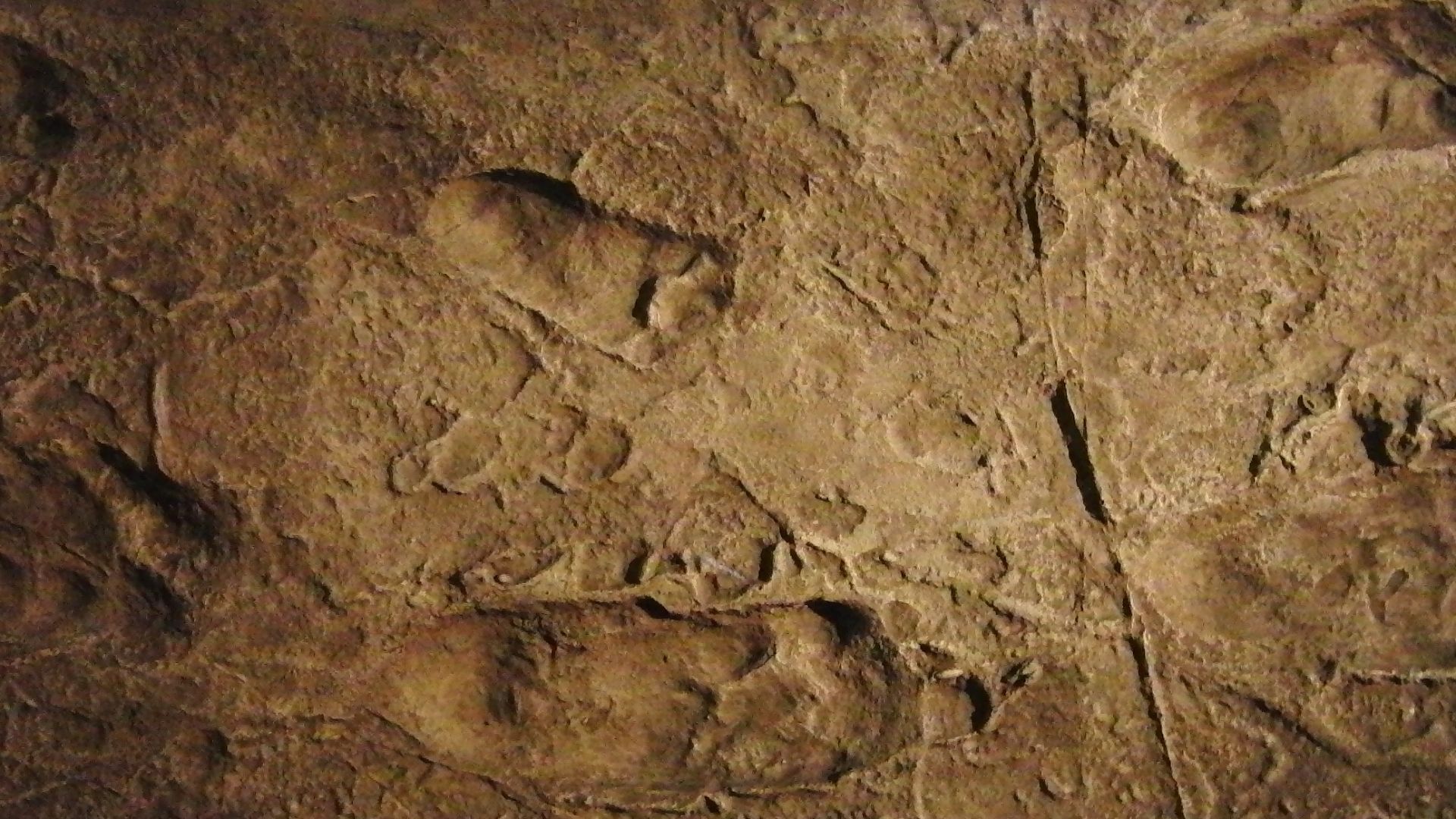
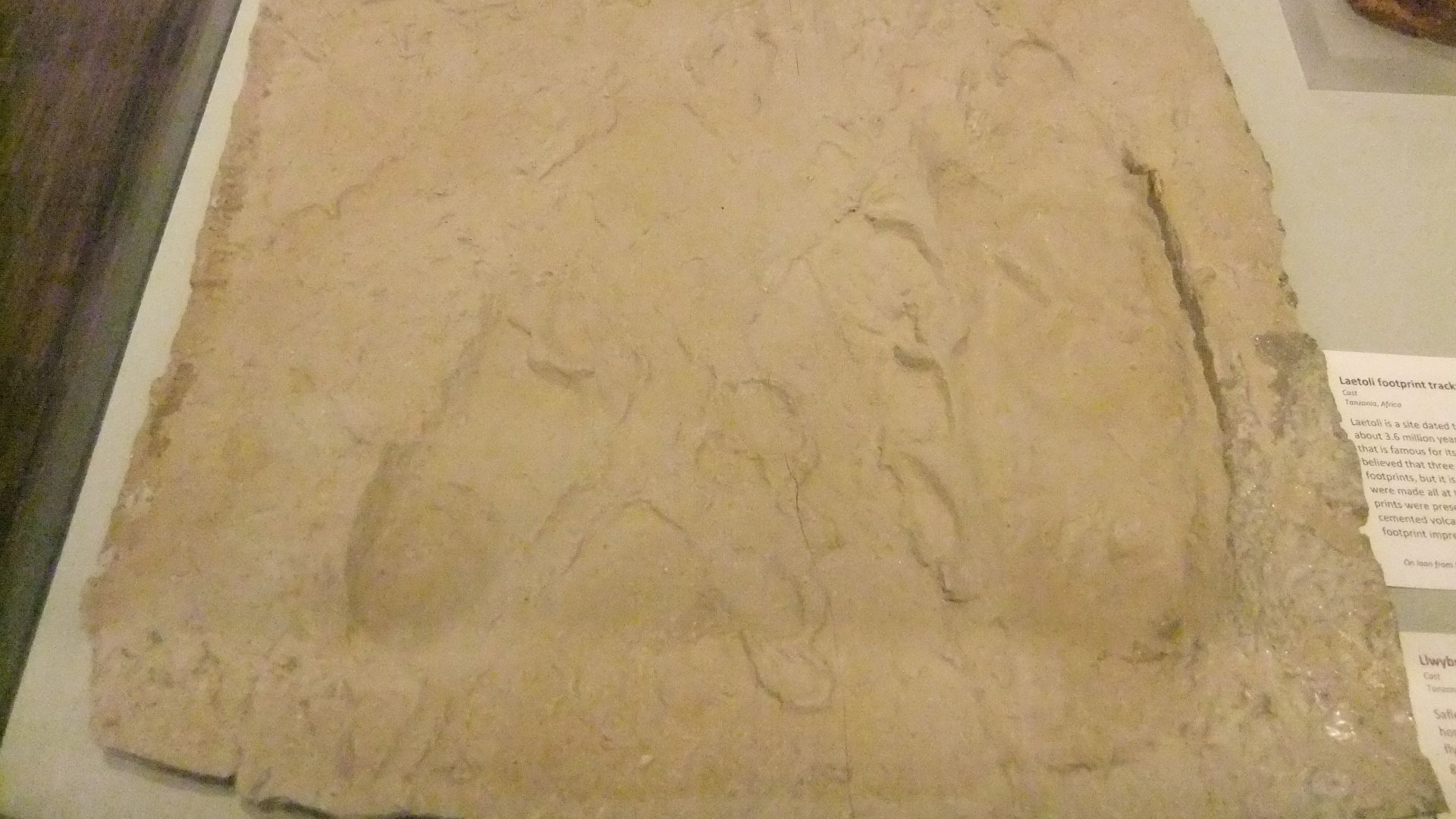
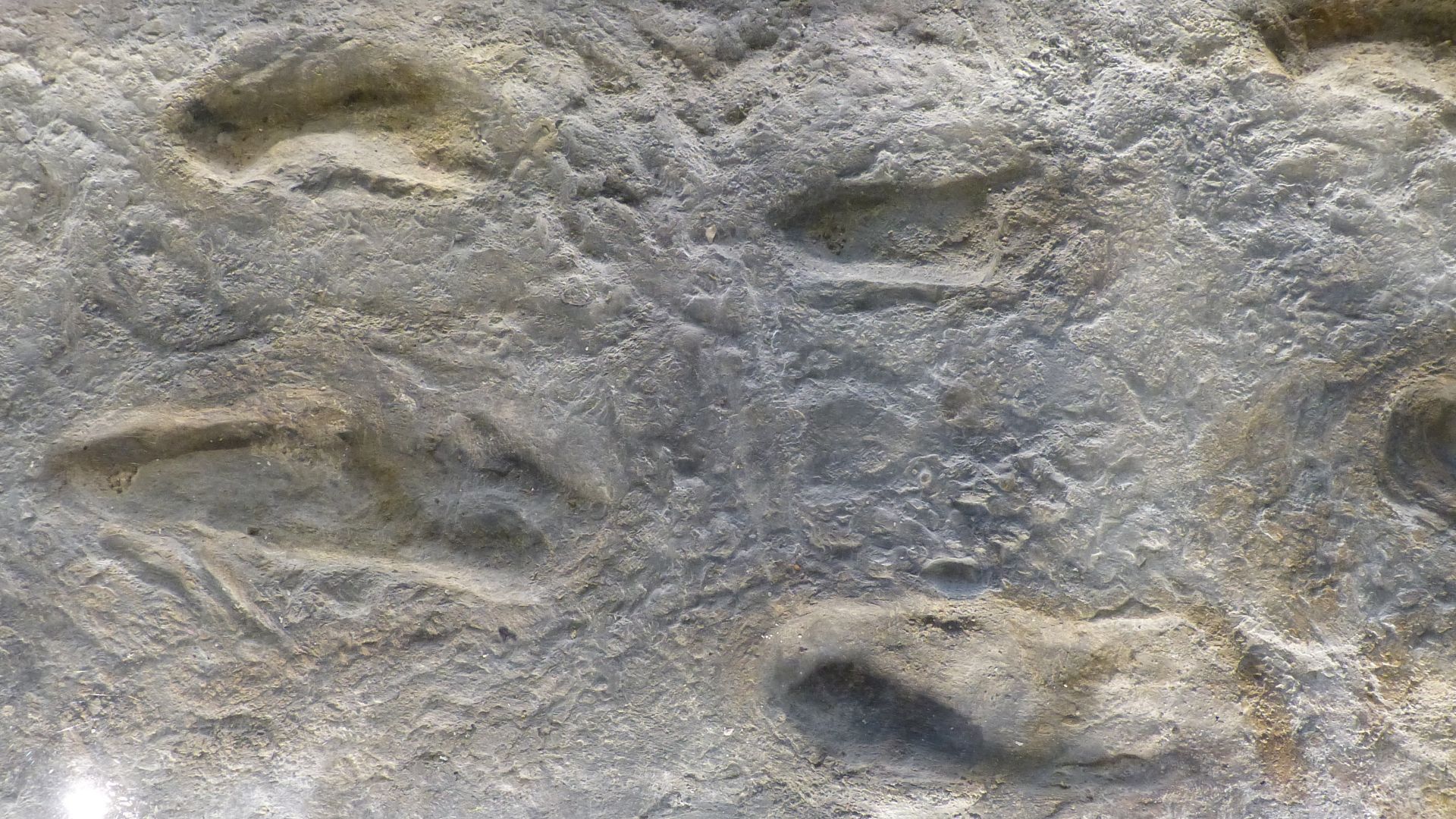
When scientists studied the prints, they were hit by a shock of recognition: these weren’t the oddly shaped, semi-human tracks some early hominins might leave. They were astonishingly similar to modern human footprints, with an aligned big toe, a clear arch, and a smooth heel-to-toe roll.
 Momotarou2012, Wikimedia Commons
Walking With Confidence, Not Caution
The Laetoli walkers weren’t shuffling or wobbling. Their gait was balanced and efficient. If you could watch them stroll by, you’d recognize the movement instantly—it was walking, as we know it, already perfected long before Homo sapiens appeared.
What Their Steps Tell Us
Each footprint preserves a moment: a heel strike, a shifting weight, a push-off from the toes. All of it shows that upright walking wasn’t something early hominins were experimenting with—it was something they’d already mastered.
 ErnestoLazaros, Wikimedia Commons
The Likely Track Makers
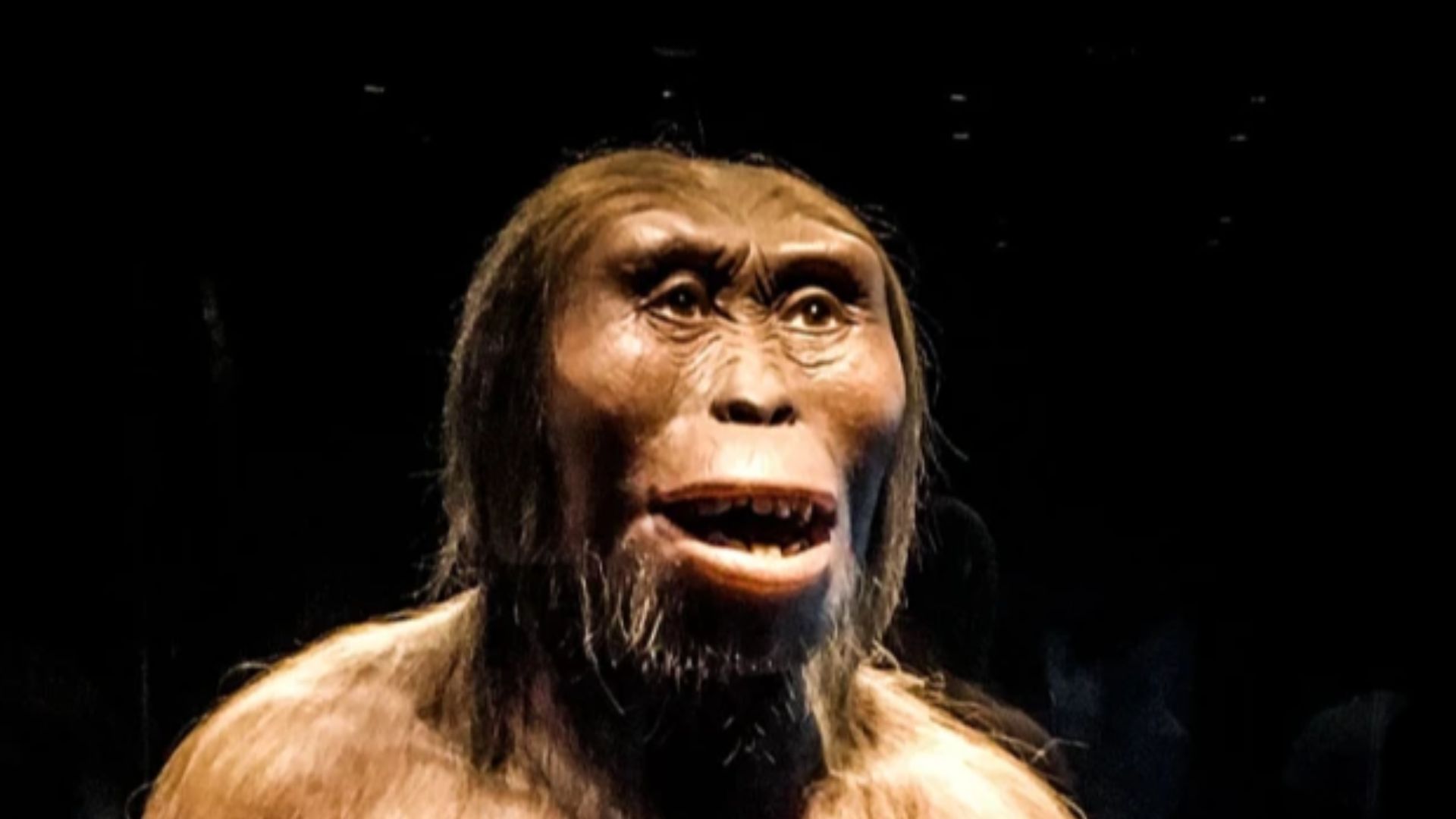
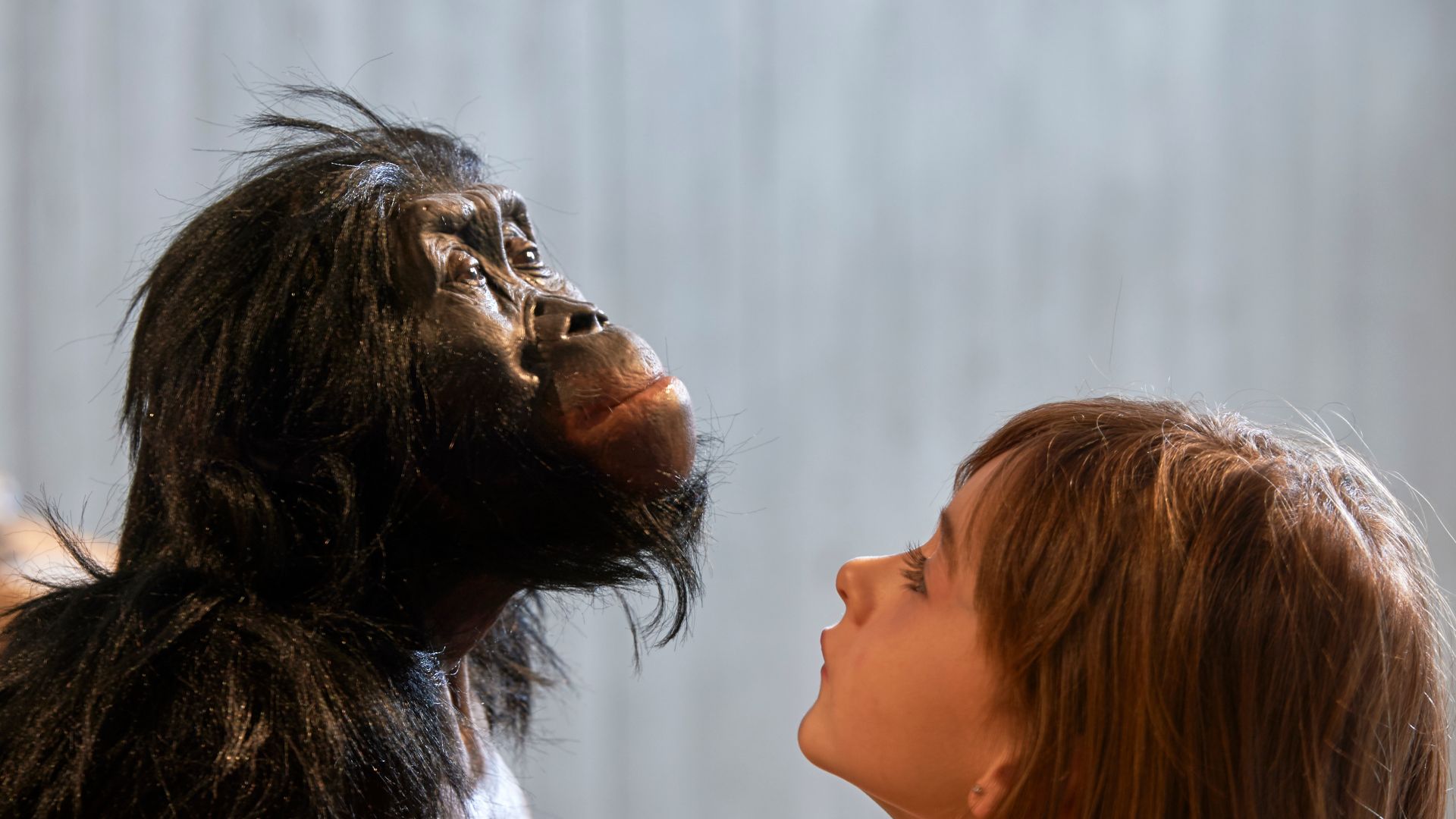
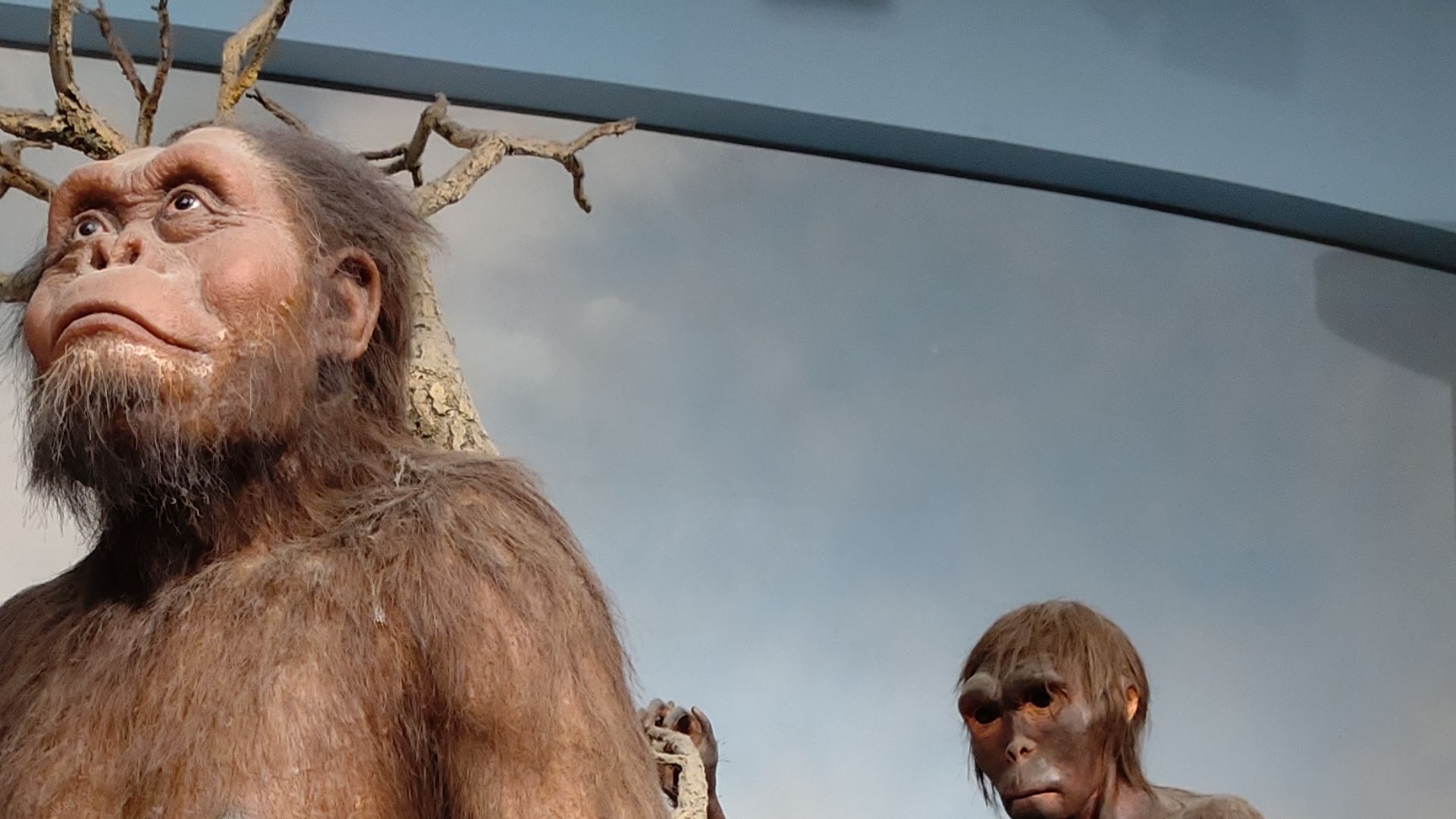
Although no bones were found in the ash layer where the prints lie, fossils from the surrounding region point strongly toward Australopithecus afarensis, the same species as “Lucy,” as the individuals who left these ancient tracks.
 Neanderthal-Museum, Mettmann, Wikimedia Commons
Matching Feet To Footprints
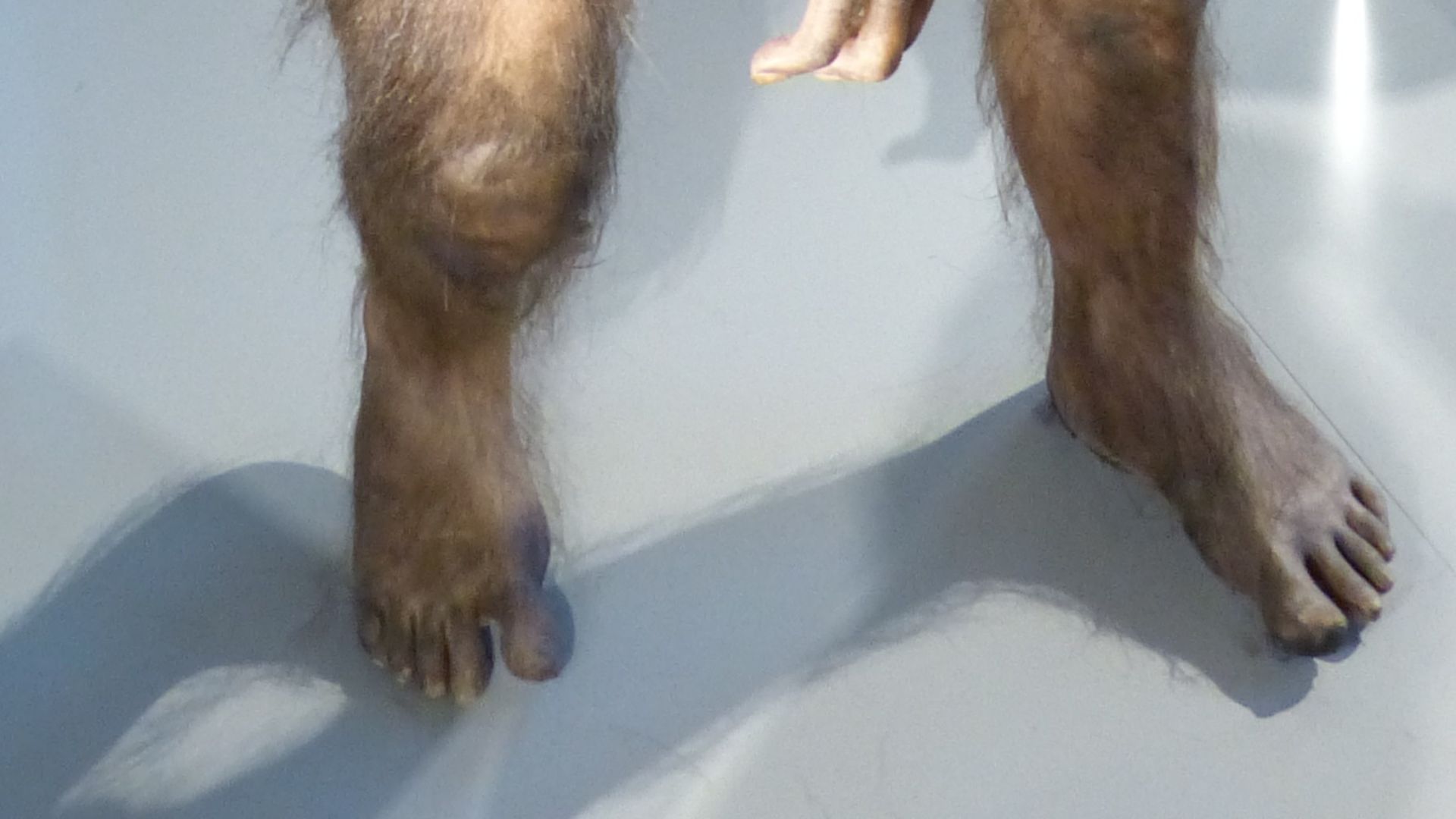
The known skeletal features of A. afarensis—such as a pelvis built for upright walking and feet suited for bipedal locomotion—fit perfectly with the footprint impressions, making the connection a compelling one.
 Wolfgang Sauber, Wikimedia Commons
A Mystery That Took Decades To Solve
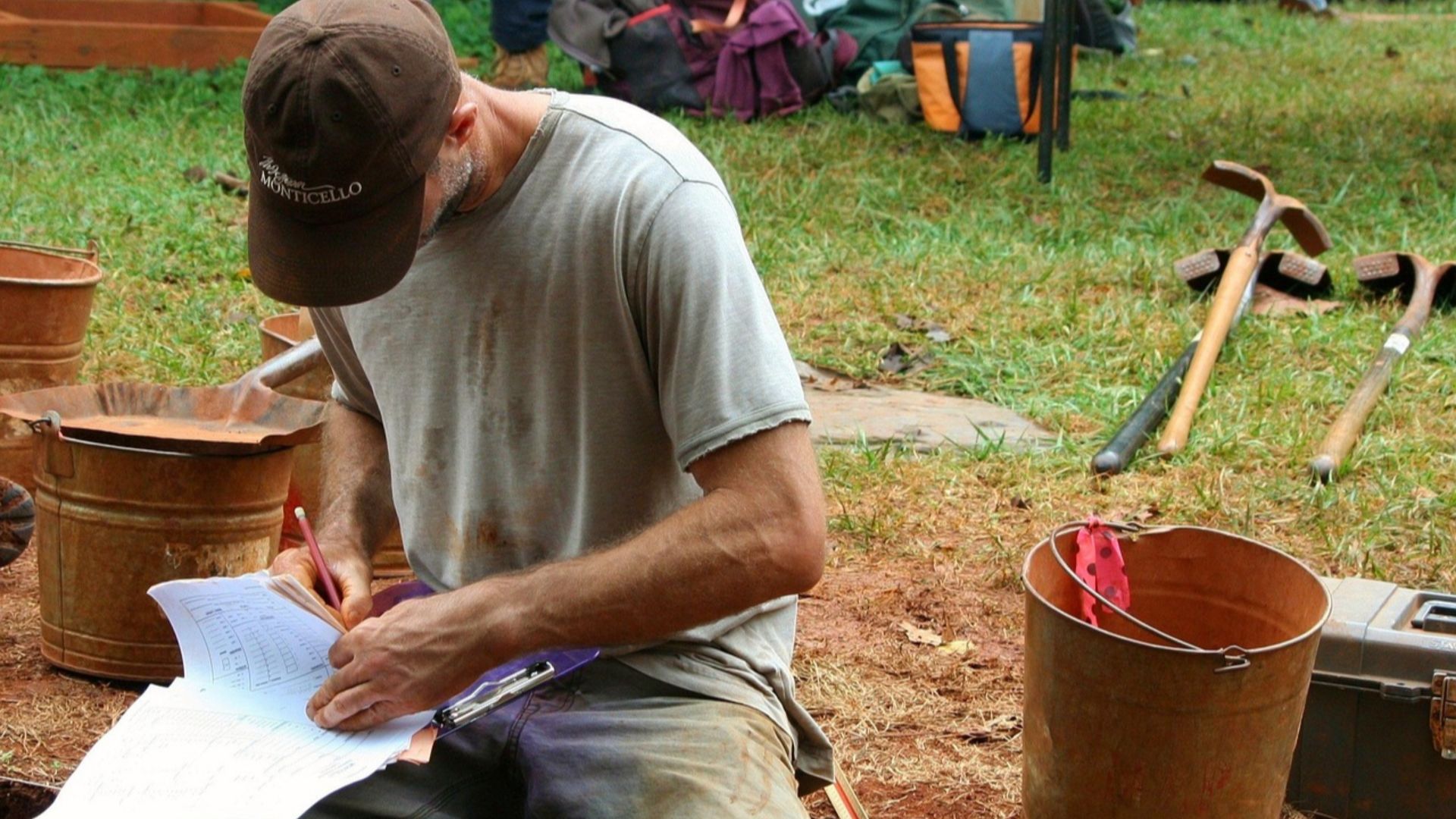
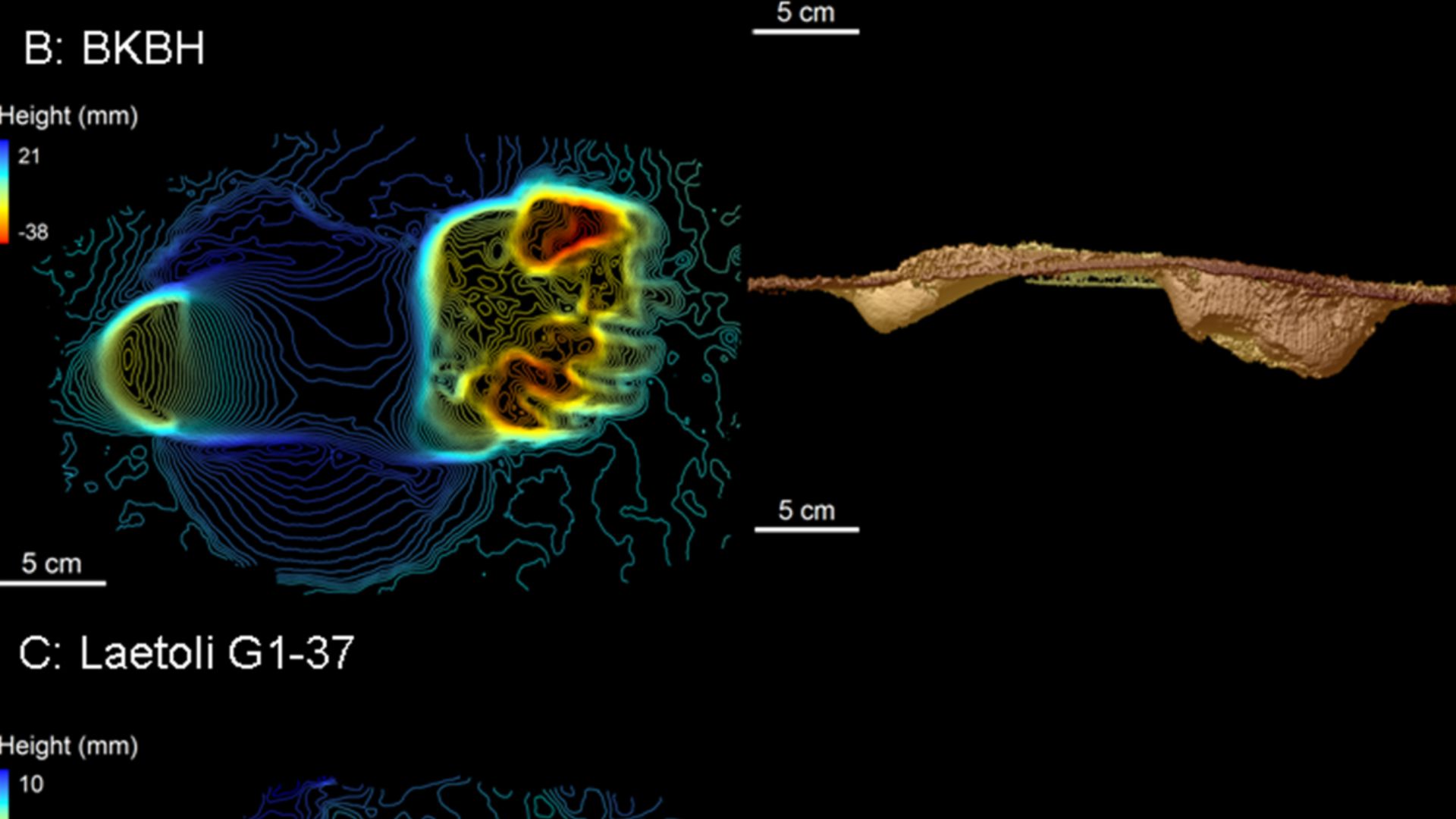
But not all footprints discovered at Laetoli were understood at first glance. Prints found at a nearby area called Site A were so unusual that researchers once wondered whether they belonged to a bear rather than a human ancestor.
Revisiting The Strange Footprints
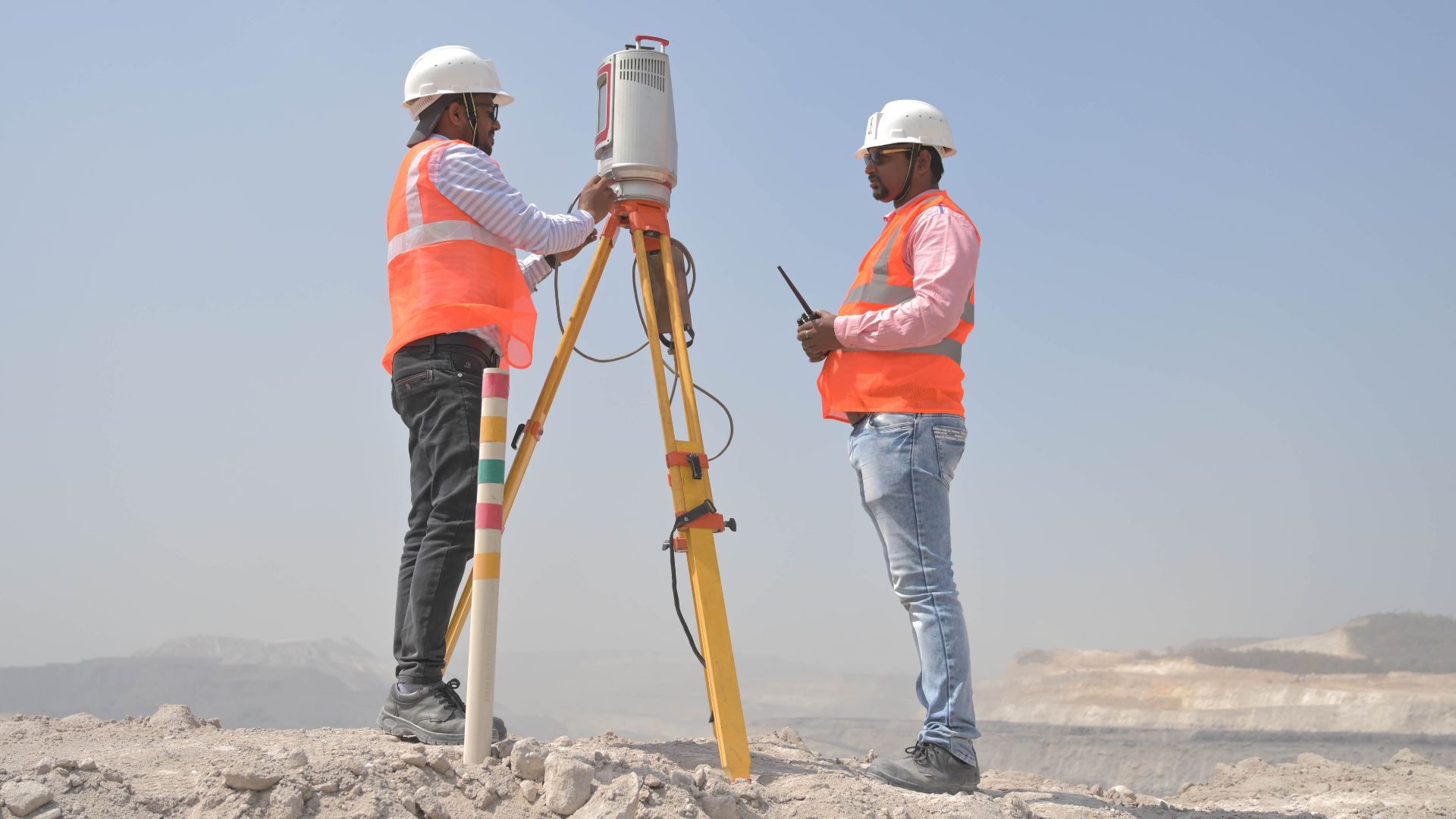
In 2021, a new team returned to Site A with advanced 3D scanning tools and discovered that those footprints weren’t bear tracks at all. They were made by a bipedal hominin—one with a slightly different walking pattern, perhaps even a different species entirely.
 Rosehubwiki, Kuber Patel, Wikimedia Commons
A Landscape Shared By Many Hominins
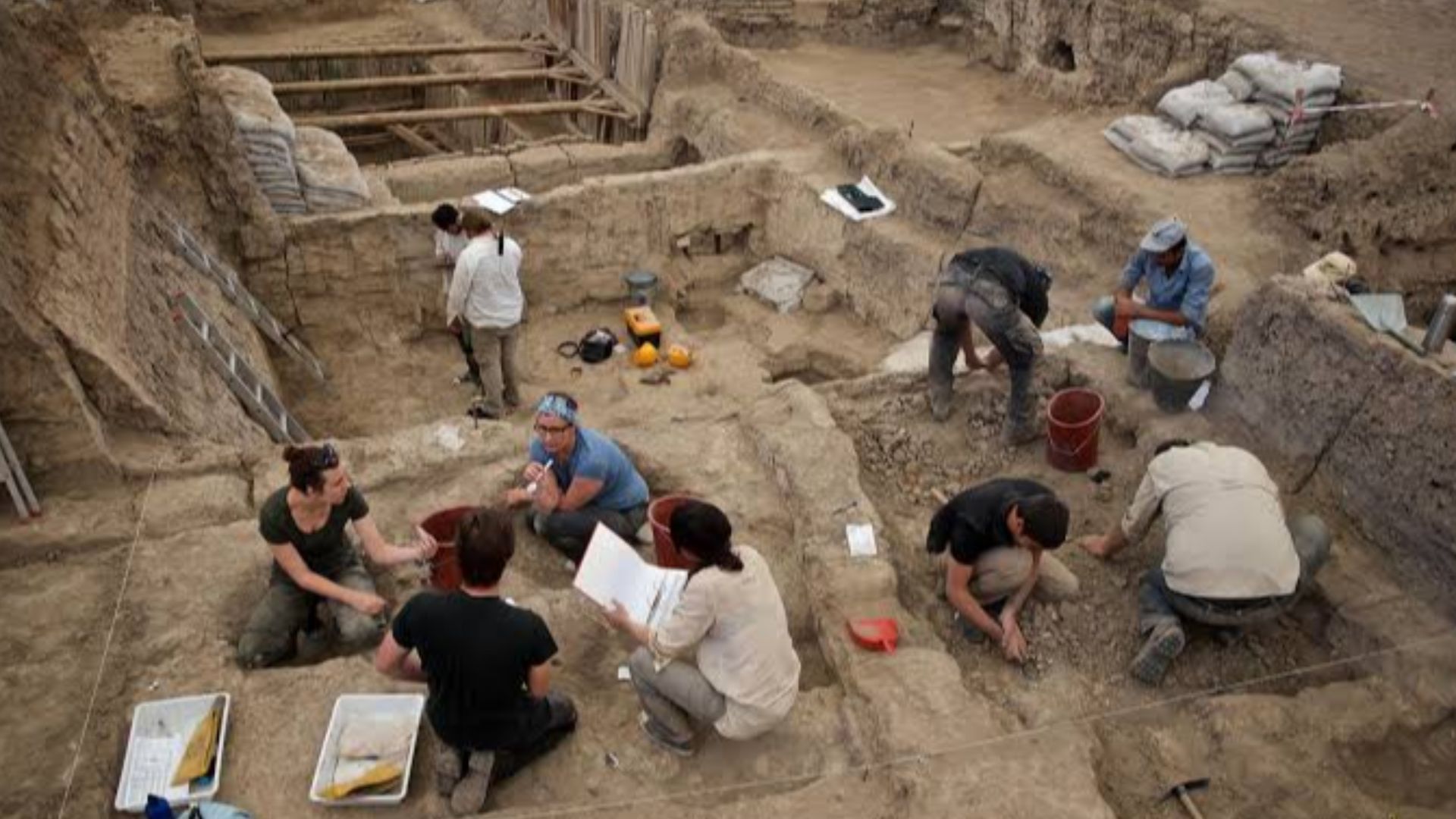
This fresh analysis hinted at something exciting: more than one kind of hominin might have lived and walked around Laetoli at the same time, adding richness—and complexity—to the picture of early human evolution.
A Whole Community in Ancient Ash
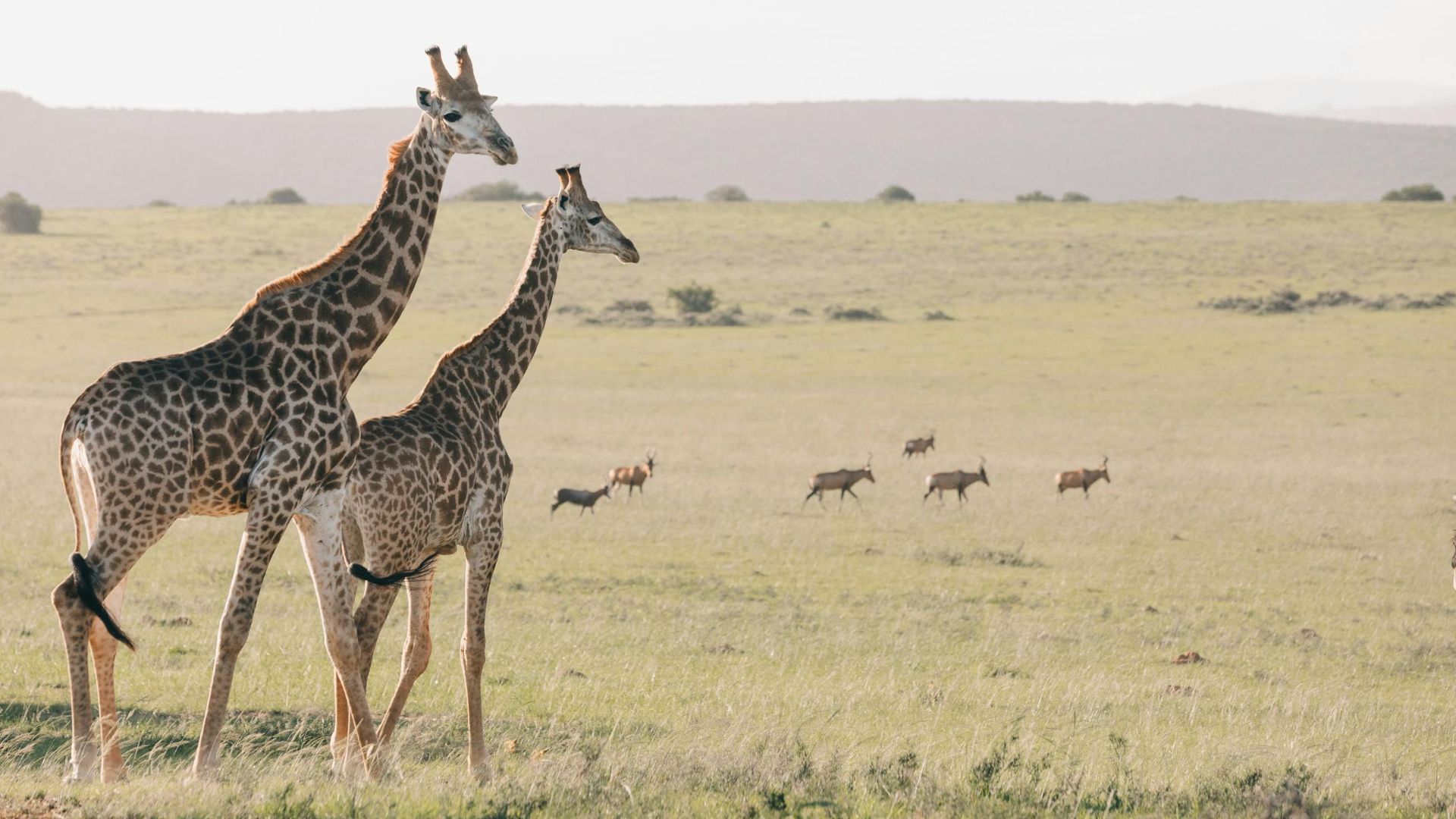
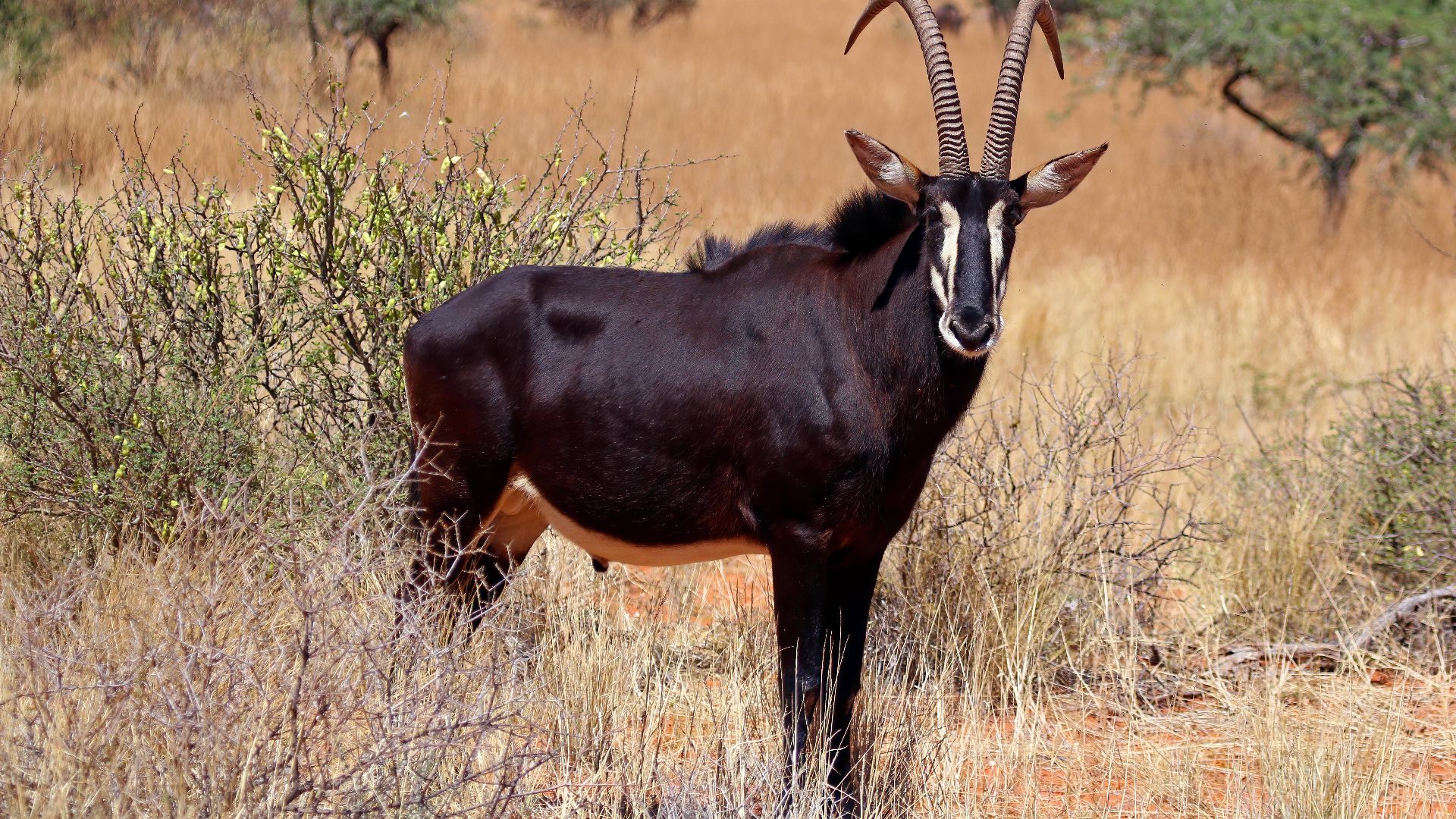
Laetoli isn’t just about human ancestors. More than twenty other animal species left tracks in the same layer of ash—elephants, giraffes, antelope, birds, and even small mammals—giving us a lively snapshot of a bustling ecosystem.
Not The Dry Savanna We Once Imagined
For years, we pictured early hominins walking through dry, open grasslands, but Laetoli paints a different picture. The region likely had patches of woodland, grassy areas, and scattered trees—more shaded, more varied, more dynamic.

Rethinking Why We Started Walking
Because this environment wasn’t a harsh savanna, it challenges the classic “Savanna Hypothesis” that upright walking evolved for survival in open grasslands. Instead, it suggests something more flexible—something tied to moving efficiently through a mixed landscape.
 Charles J. Sharp, Wikimedia Commons
Why Two Feet Were Better Than Four
In a patchwork environment like Laetoli, walking upright might have allowed early hominins to carry food, travel longer distances, or move between clusters of trees more easily. Whatever the reason, evolution clearly stuck with the idea.
 Guston Sondin-Klausner, Wikimedia Commons
A Story Etched In Footsteps
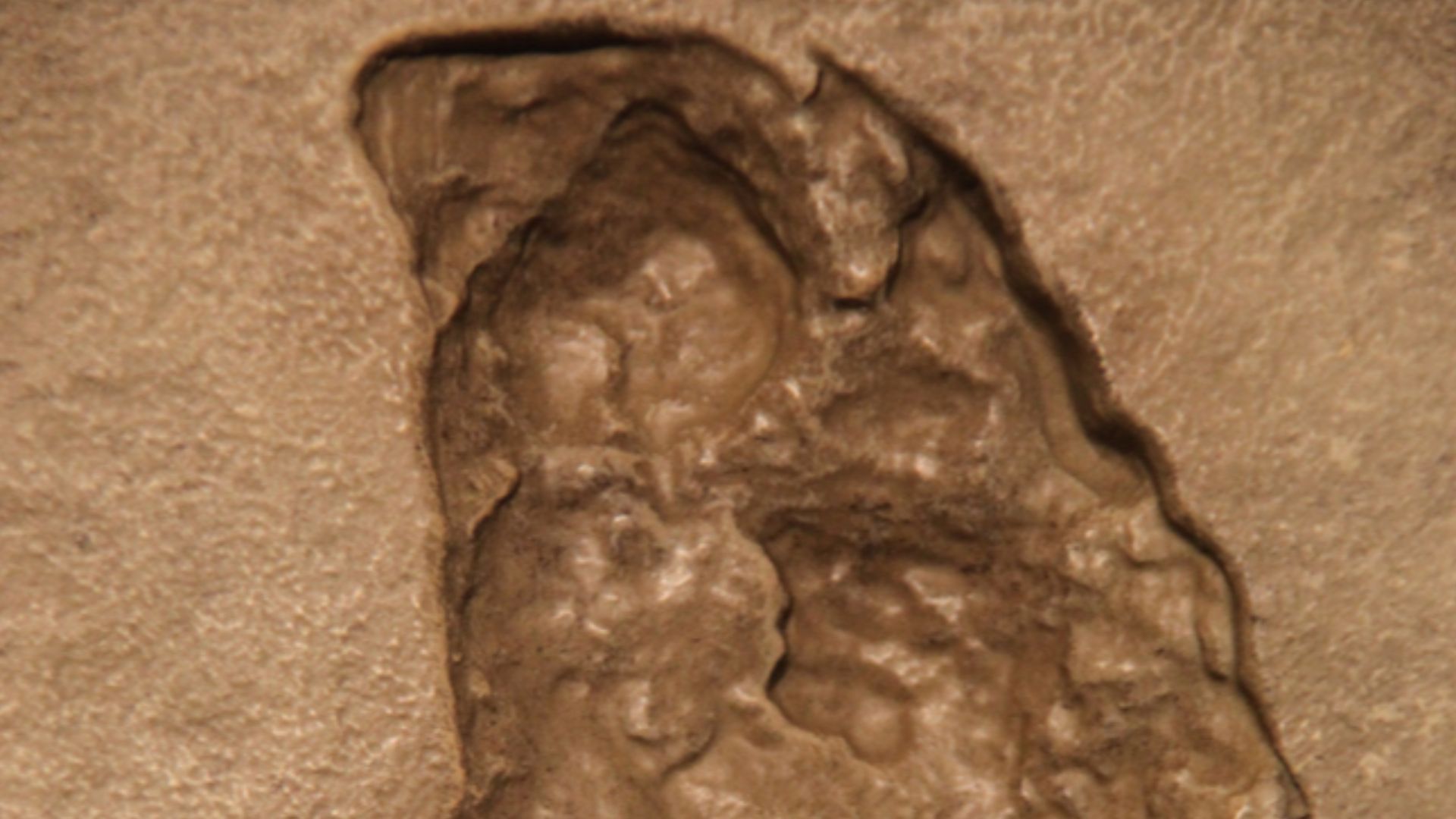
Footprints provide a kind of evidence bones can’t—they reveal behaviour. They show how early hominins placed their feet, how fast they walked, and even how close they were to one another on that day 3.6 million years ago.
 Raichlen DA, Gordon AD, Harcourt-Smith WEH, Foster AD, Haas WR Jr, Wikimedia Commons
Hints Of Social Interaction
Some analyses suggest one individual walked slightly behind the others, perhaps a smaller or younger member of the group following in the footsteps—literally—of the others. Suddenly the science feels personal, almost intimate.
A Rare Type Of Fossil
Bones can break, decay, or scatter, but footprints capture a moment in motion. They preserve a gesture, a pace, a rhythm—a living snapshot in a world that’s otherwise silent.
 Tim from Washington, D.C., United States of America, Wikimedia Commons
A Treasure Worth Protecting
Even though the footprints survived millions of years, they’re surprisingly fragile today. Rain, roots, and shifting soil can damage them far more quickly than deep time ever did.
 Emilio J. Rodríguez Posada, Wikimedia Commons
How Scientists Preserve The Tracks
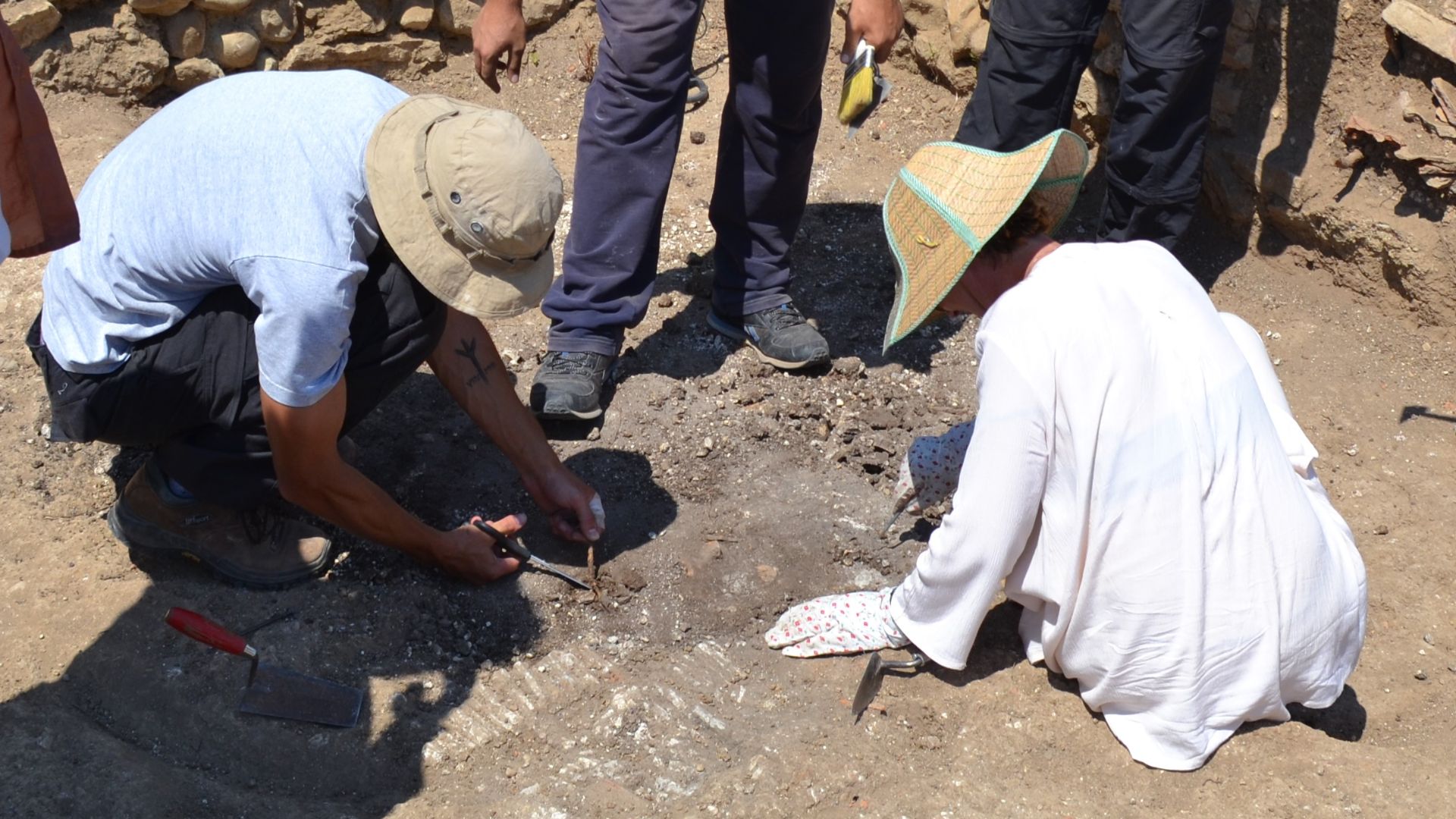
To keep the prints safe, archaeologists reburied them carefully under layers of protective material and soil. It might seem odd, but hiding them underground is the best way to keep them intact.
Digitizing The Past For The Future
Modern technology now allows researchers to capture the Laetoli tracks in 3D, creating exact digital replicas that can be studied, shared, and preserved—even if the originals become too delicate to expose.
Bringing Laetoli To The World
Museum casts and replicas make it possible for people everywhere to stand “next to” the footprints and imagine what it must have been like to walk across ancient ash as early hominins once did.
 Wolfgang Sauber, Wikimedia Commons
The Questions That Keep Us Wondering
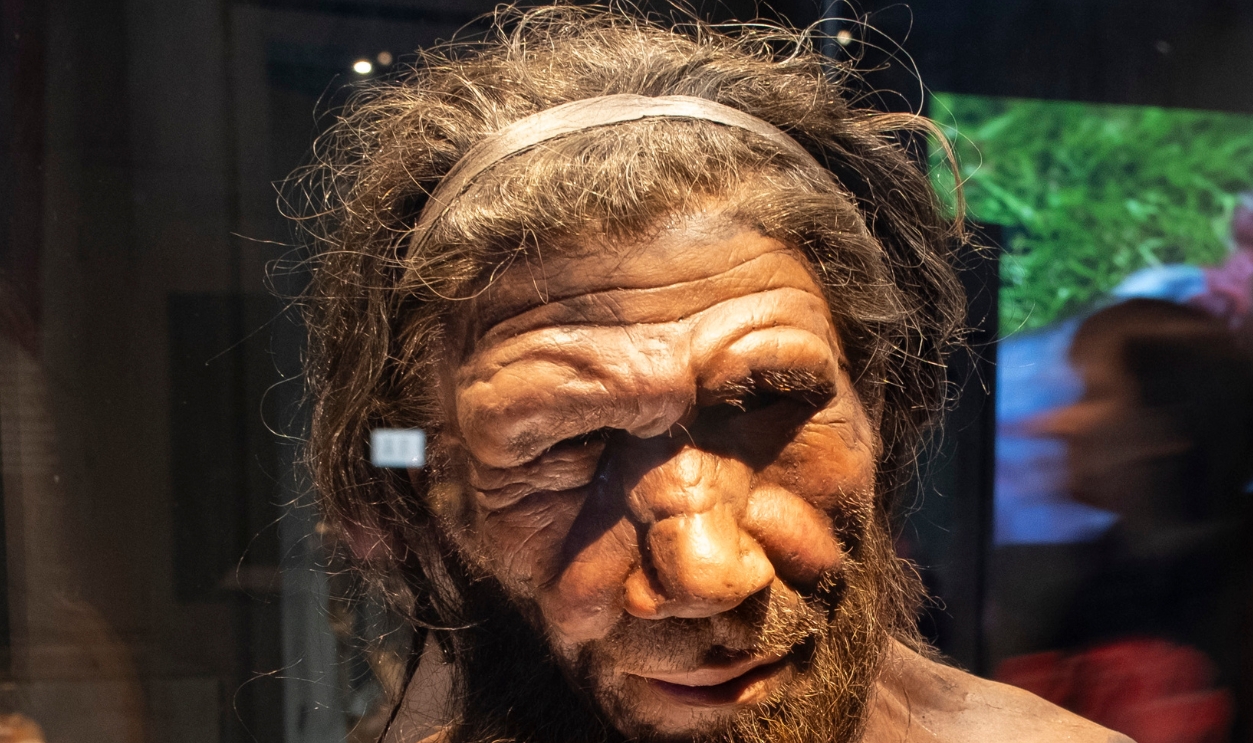
Even with all we’ve learned, we still don’t know exactly who made the prints or what their day-to-day lives were like. The footprints give us movement, but not motive.

The Daily Lives Behind The Steps
Were they gathering food? Traveling between patches of woodland? Escaping a predator? Or just walking because walking was simply what they did? Their intentions are lost; only their steps remain.
Dreaming Of More Discoveries
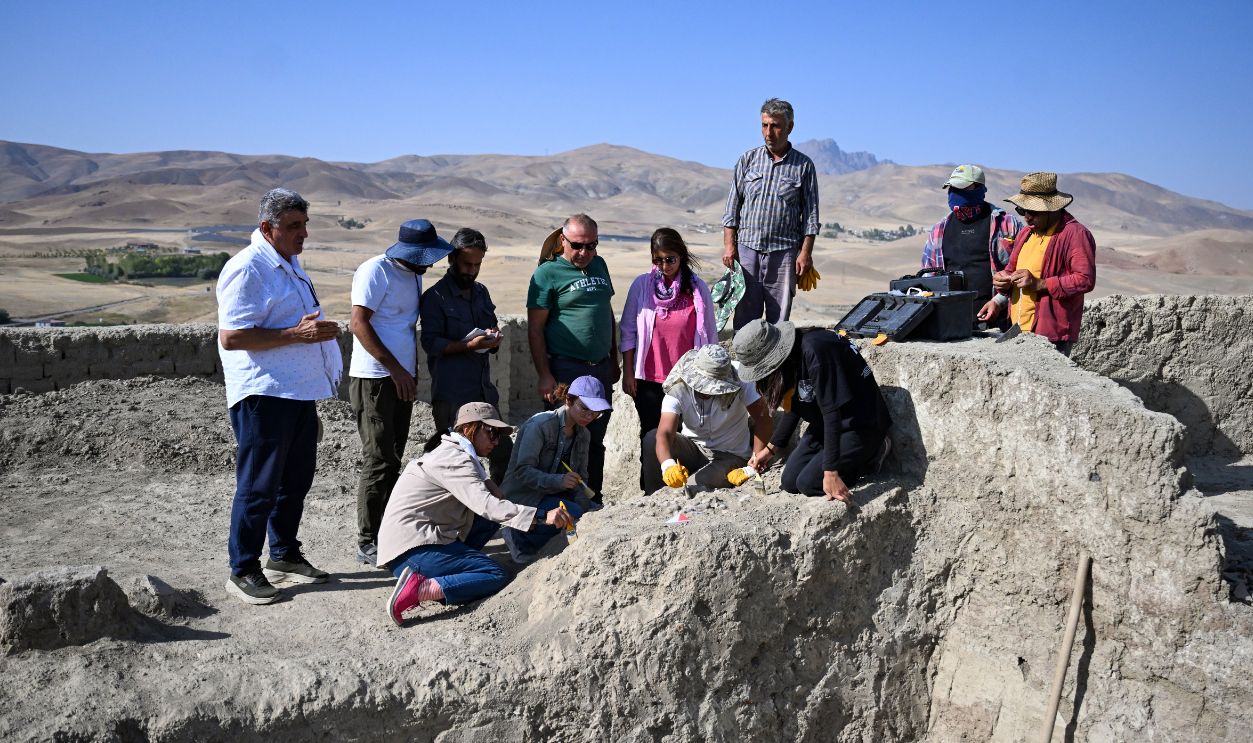
The rediscovery of the Site A footprints reminds us that the Laetoli region may still hold untapped secrets. Older, more complex, or more varied footprints could still lie beneath the surface.
What These Footprints Mean For Us
In the end, the Laetoli footprints remind us that the human story is ancient, layered, and full of quiet moments that shaped our fate. Before tools or fire or language, there was the simple act of walking.
 Tim Evanson, Wikimedia Commons
A Final Word On Ancient Steps
When we study those footprints today, we’re not just looking at impressions in rock—we’re glimpsing a small group of early humans taking steps that would echo across millions of years, eventually leading all the way to us.
You May Also Like:
39 Foods With Misleading Names—And What They Actually Are